Digital Wallets vs. Traditional Banking: Which is Safer?
28 September 2026
The question sounds simple, but it hides a trap. People ask it the way they might ask whether a car is safer than a house. The two things protect different assets, against different threats, in different ways. A digital wallet and a bank account are not competing versions of the same product. They are different tools with different risk profiles, and the honest answer to "which is safer" depends on what you are protecting, from whom, and under what circumstances.
This article breaks that down properly. Not with a list of pros and cons you have read a dozen times, but with the actual mechanics of how each system protects your money, where each one fails, and how to decide what belongs where.

What We Actually Mean by "Digital Wallet" and "Traditional Banking"
Before comparing safety, we need to be precise about terms, because most confusion comes from lumping very different things together.Digital wallets come in several distinct forms
A digital wallet is not one thing. It is a category that includes:- Pass-through wallets like Apple Pay and Google Pay, which store a tokenized version of your card and never actually hold your money. The funds still live in your bank account or on your credit card.
- Stored-value wallets like PayPal balances, Venmo balances, or Cash App balances, where money sits with the provider until you spend or withdraw it.
- Crypto wallets, which hold private keys to blockchain assets. These are not wallets in the traditional sense at all. They hold access, not funds.
- Bank-owned wallets, offered by institutions like Chase or Wells Fargo, which are essentially a mobile interface layered on top of a regular deposit account.
Each of these has a completely different safety profile. A pass-through wallet cannot lose your money because it never holds it. A stored-value wallet can, if the provider fails or freezes your account. A crypto wallet can lose everything if you lose your keys. Treating them as one category is the first mistake people make.
Traditional banking is broader than checking and savings
Traditional banking includes checking accounts, savings accounts, certificates of deposit, money market accounts, and trust accounts. What unites them is that your money sits on the bank's balance sheet as a liability owed to you, and that relationship is governed by a dense framework of regulation, insurance, and consumer protection law.That legal and regulatory scaffolding is the single biggest difference between the two worlds, and it is the thing most people underestimate when they compare them.

The Real Question: What Kind of Safety?
Safety is not one property. It has at least four distinct dimensions, and a system can be strong in one and weak in another.1. Safety from loss
Can you lose the money through fraud, theft, or your own mistake? Traditional bank accounts are generally well protected here, provided you report unauthorized activity promptly. Digital wallets vary enormously. A pass-through wallet is quite safe because the underlying card protections still apply. A stored-value wallet is more exposed, because the money sits with a company that may have weaker obligations to you.2. Safety from institutional failure
What happens if the company holding your money goes under? Bank deposits in the United States are insured by the FDIC up to $250,000 per depositor, per bank, per ownership category. Credit union deposits are insured by the NCUA at the same level. This is not a marketing promise. It is a statutory guarantee backed by the full faith and credit of the federal government.Most digital wallet providers are not banks. Money held in a PayPal or Venmo balance is generally not FDIC insured in the same way, though some providers now sweep balances into insured accounts through partner banks. That distinction matters enormously, and it is buried in terms of service that almost nobody reads.
3. Safety from your own errors
Here is where the picture flips. Traditional banking is slow, and slowness is a feature. A wire transfer can be reversed if caught quickly. A fraudulent check can be clawed back. ACH transfers take a day or two, which gives you a window to notice a problem.Digital wallets are fast, and speed is a double-edged sword. If you send money to the wrong person through Zelle, Venmo, or Cash App, it is usually gone. The money moves in seconds, and the receiving party has no obligation to return it. This is not a flaw in the technology. It is a design choice that trades reversibility for speed, and it has cost people real money.
4. Safety from surveillance and control
Some people define safety as protection from having their accounts frozen or their transactions monitored. Here, digital wallets and banks have different vulnerabilities. Banks are heavily regulated and must comply with anti-money-laundering rules, which means they can and do freeze accounts. Digital wallet providers face similar rules and often apply them more aggressively because they have less infrastructure for resolving disputes. Crypto wallets, by contrast, offer more privacy and control, but they also offer no recourse if something goes wrong.The point is that "safer" depends entirely on which threat you are worried about.
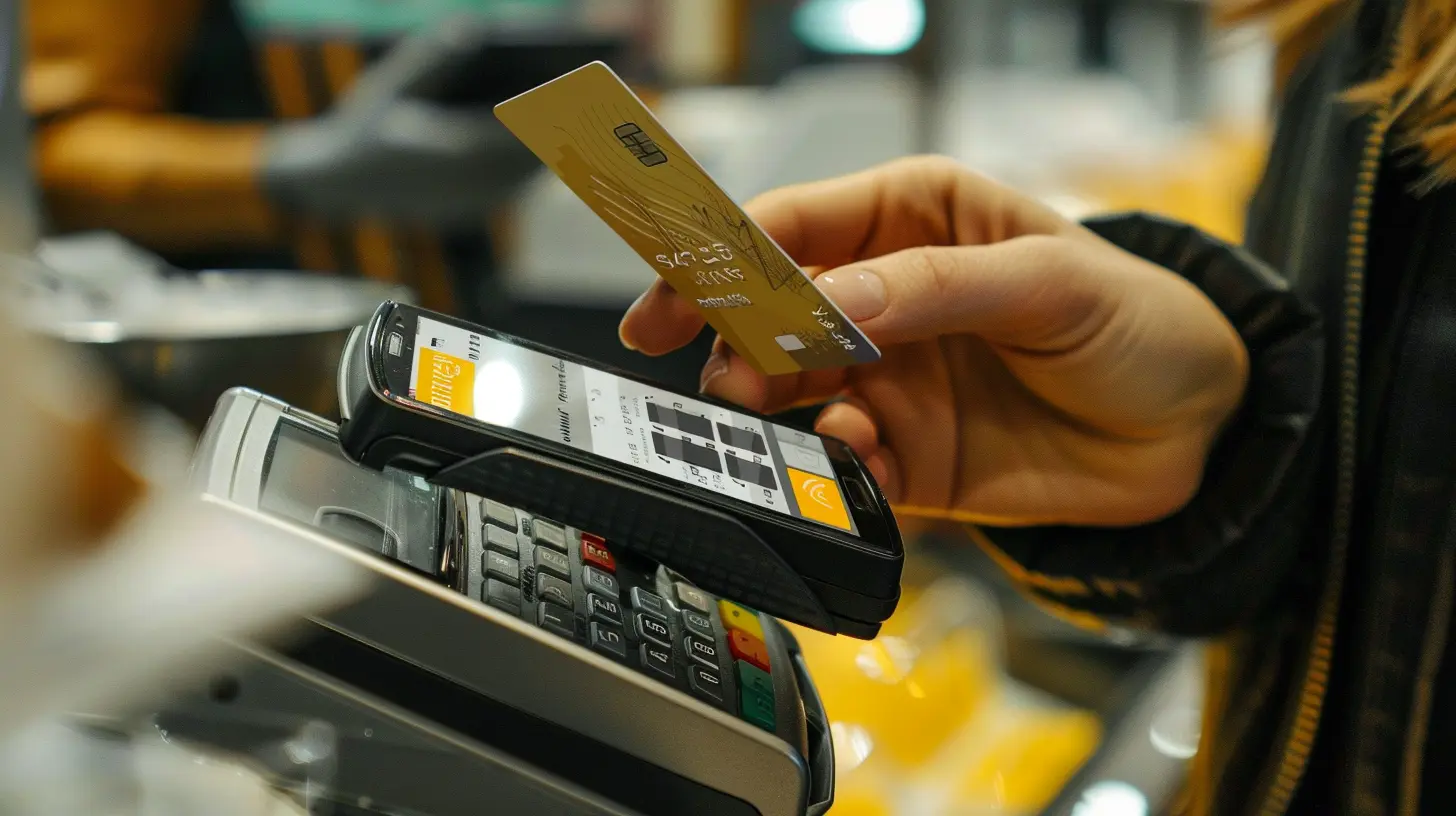
How Banks Actually Protect Your Money
Understanding why banks are considered safe requires understanding the machinery behind them.Deposit insurance is the foundation
The FDIC was created in 1933 in response to thousands of bank failures during the Great Depression. Before it existed, losing your money when a bank failed was a real and common risk. Since its creation, no depositor has lost a single cent of insured funds due to a bank failure in the United States. That is a remarkable track record, and it is the reason people sleep well with money in a savings account.Deposit insurance covers up to $250,000 per depositor, per institution, per ownership category. That last phrase matters. You can hold more than $250,000 at one bank and still be fully insured if the accounts are structured in different ownership categories, such as individual, joint, and certain retirement accounts.
Regulation creates accountability
Banks operate under a web of rules: capital requirements, liquidity requirements, stress testing, consumer protection laws, and regular examinations. This does not make them immune to failure, but it makes failure slower and more visible. When a bank does fail, regulators typically step in over a weekend, transfer deposits to a healthy institution, and customers barely notice.Reg E and error resolution
The Electronic Fund Transfer Act and its implementing regulation, Regulation E, give you specific rights when unauthorized electronic transfers occur from your bank account. If you report a problem within two business days of discovering it, your liability is generally capped at $50. Report within 60 days of your statement being sent, and the cap is $500. Beyond that, your liability can become unlimited, which is why ignoring your statements is dangerous.These protections are not automatic for all financial products. They apply to bank accounts and certain prepaid accounts, but not necessarily to every digital wallet.
How Digital Wallets Actually Protect Your Money
Digital wallets are not unregulated. They just operate under a different set of rules, and those rules vary by provider and by the type of wallet.Tokenization is genuinely more secure than swiping a card
When you add a card to Apple Pay or Google Pay, the actual card number is not stored on your phone. Instead, the provider creates a device-specific token that stands in for your card number. If your phone is stolen and the token is somehow extracted, that token is useless outside your specific device. Merchants never see your real card number.This is a meaningful security improvement over physical cards, which can be skimmed, photographed, or copied. In this narrow sense, a pass-through wallet is safer than the card it replaces.
Biometric authentication adds a layer
Face ID and fingerprint scanning mean that someone who steals your unlocked phone still cannot easily make a payment. This is real protection, though it is not foolproof. Determined attackers have found ways around biometrics, and people who use weak passcodes undermine the whole system.But stored-value wallets carry real risks
Here is where the safety story gets complicated. When you hold a balance in Venmo, Cash App, or PayPal, you are essentially lending money to that company. You are an unsecured creditor. If the company fails, you may not get your money back in full, or at all, unless the funds are held in a way that qualifies for insurance.Some providers have addressed this by sweeping balances into FDIC-insured accounts through partner banks. PayPal and Venmo, for example, have offered such arrangements. But the details matter, and they change. You need to check the current terms for any wallet where you keep a meaningful balance.
Fraud resolution is weaker
Bank fraud protections are statutory. Digital wallet protections are largely contractual. That means they are whatever the provider's terms of service say they are, and those terms can change. Providers often do a good job of resolving fraud, but they are not legally required to do so in the same way banks are.Where Each System Fails
Every system has failure modes. Knowing them is more useful than knowing which one is "better."Traditional banking failure modes
- Slow payments. ACH transfers can take days. Wire transfers are faster but expensive and often irreversible.- Account freezes. Banks can freeze accounts for suspicious activity, and resolving it can take weeks.
- Overdraft fees. Poorly designed accounts can cost you money for spending money you do not have.
- Phishing and social engineering. Bank customers are prime targets because bank accounts hold real money.
- Institutional failure. Rare, but possible, and disruptive even when insured.
Digital wallet failure modes
- Irreversible mistakes. Sending money to the wrong person is often permanent.- Account takeovers. If someone gets into your phone or email, they may be able to drain your wallet.
- Weak recourse. Disputes are handled by the provider, not by law.
- Uninsured balances. Money sitting in a wallet may not be protected if the provider fails.
- Scam vulnerability. Peer-to-peer payment apps are a favorite tool of scammers because payments are fast and final.
Notice that the failure modes are almost mirror images. Banks are slow and protected. Wallets are fast and exposed. Neither is strictly better. They are optimized for different things.
Common Mistakes and Misconceptions
A few myths are worth correcting directly.Myth: Digital wallets are unregulated
Not true. In the United States, money transmitters must register with FinCEN and comply with state licensing regimes. The Consumer Financial Protection Bureau has authority over certain prepaid accounts. The rules are different from banking rules, but they exist.Myth: Money in a wallet is always FDIC insured
Only if the provider has arranged for it to be held in an insured account, and only under specific conditions. Do not assume. Check.Myth: Banks are always safer
Banks are safer for holding large balances and for reversing errors. They are not safer for every transaction. If you are buying something from a stranger online, a credit card is often the safest instrument because of chargeback rights. If you are sending money to a friend, a wallet is faster and fine.Mistake: Keeping a large balance in a wallet
Wallets are for spending, not saving. Keeping thousands of dollars in a Venmo or Cash App balance exposes you to risks that a bank account does not. Move money to an insured account when you are not actively using it.Mistake: Ignoring your statements
Reg E protections depend on you reporting problems promptly. If you do not review your statements, you can lose your right to recover funds.Mistake: Using the same password everywhere
Account takeovers often start with a credential leak from an unrelated site. Unique passwords and two-factor authentication are not optional.Practical Guidance: How to Use Both Safely
The best approach is not to choose one over the other. It is to use each for what it does well.Use banks for what banks are good at
- Holding your emergency fund and long-term savings.- Receiving your paycheck.
- Paying large, recurring bills.
- Any transaction where you might need to reverse a payment.
- Keeping balances above what you would be comfortable losing.
Use wallets for what wallets are good at
- Small, fast payments to people you know.- Online checkout where tokenization protects your card number.
- Situations where you want to avoid sharing your card details with a merchant.
- Travel, where a phone-based wallet is harder to steal than a physical card.
Follow a few non-negotiable habits
- Turn on two-factor authentication everywhere.- Use a password manager.
- Review statements weekly, not monthly.
- Report problems immediately, not when you get around to it.
- Keep wallet balances small.
- Read the terms for any wallet where you plan to hold money.
- Never send money to someone you have not verified through a second channel.
Know your recourse before you need it
Before you use a payment method, ask yourself: if this goes wrong, what can I do? If the answer is "nothing," you may want a different method. Credit cards offer strong chargeback rights. Banks offer Reg E protections. Wallets offer whatever their terms say. Choose accordingly.
A Realistic Verdict
So which is safer? For holding money, banks are safer, and it is not close. Deposit insurance, statutory protections, and a century of regulatory infrastructure make them the default place for money you cannot afford to lose.For moving money quickly and for protecting your card details during a transaction, digital wallets are often safer than the alternatives. Tokenization and biometric authentication are genuine improvements over carrying a physical card.
The people who get into trouble are usually the ones who treat a wallet like a bank account or a bank account like a wallet. They keep too much money in an app, or they expect a bank to reverse a payment that was never reversible in the first place.
Use each tool for its strengths. Keep your money where it is protected. Keep your transactions where they are convenient. And always know what happens if something goes wrong before you find out the hard way.
all images in this post were generated using AI tools
Category:
Digital WalletsAuthor:

Yasmin McGee
Discussion
rate this article
1 comments
Henry Evans
Great article! It's interesting to see how digital wallets are shaking things up in finance. Both options have their pros and cons, but I think it ultimately comes down to personal preference and comfort with technology.
September 28, 2026 at 4:05 AM