How Banks Are Preparing for the Next Wave of Cyber Attacks
21 August 2026
Ah, the modern bank. A fortress of marble, glass, and... a patchwork of legacy code from 1998 that nobody fully understands anymore. If you think your bank is spending its days polishing the brass railings and counting cash, you are sorely mistaken. They are spending their days in a cold, windowless room, staring at a screen that shows a live map of the world with little red dots popping up like a game of global whack-a-mole. The next wave of cyber attacks is not a question of "if." It is a question of "when," "how bad," and "whose bonus gets clawed back."
Let us take a sarcastic, yet deeply informed, stroll through the hallowed halls of financial cybersecurity. We will look at what banks are actually doing, what they are pretending to do, and what they should be doing before the digital equivalent of a hurricane hits their mainframe.
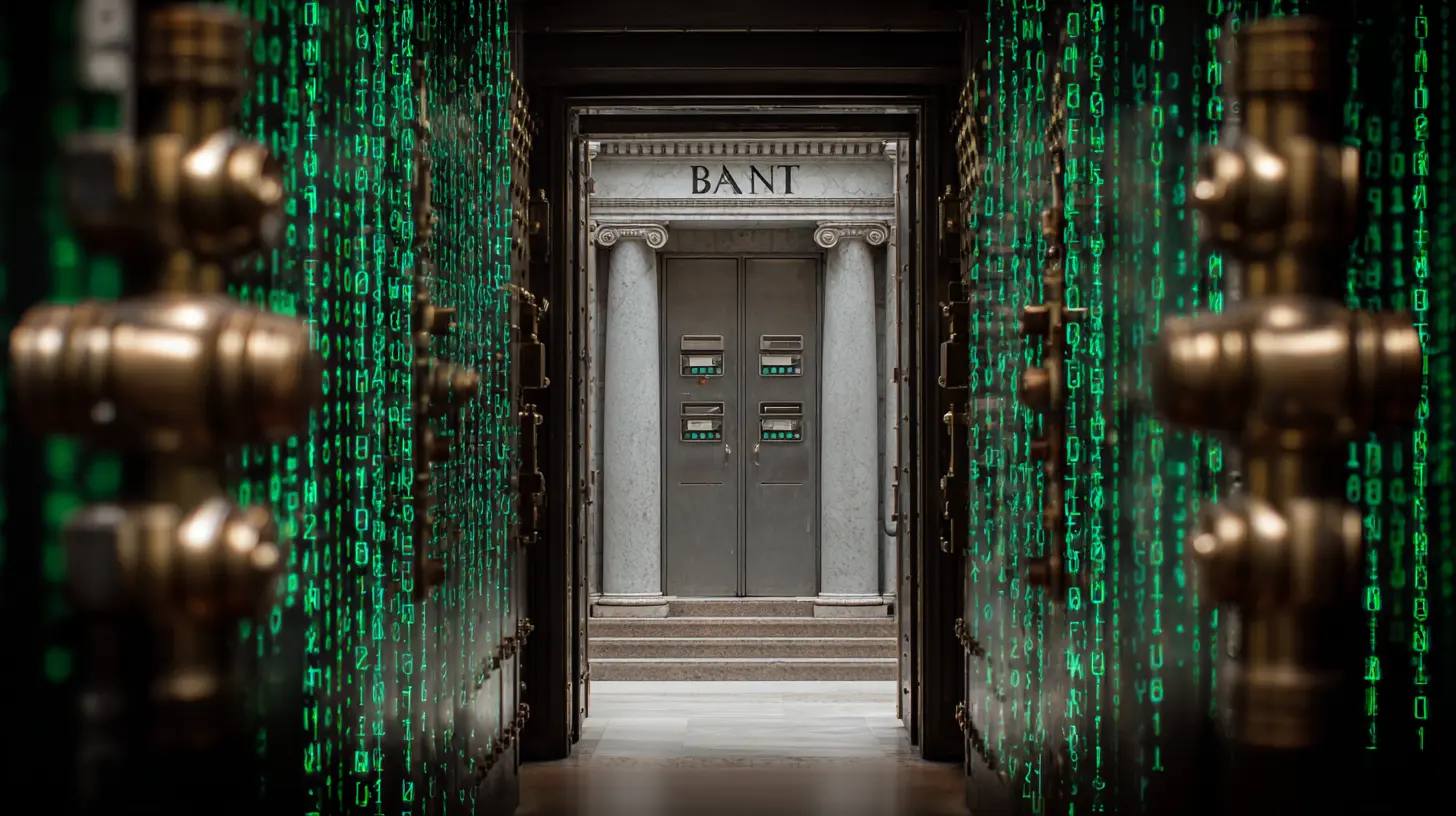
The "We Are Totally Fine" Budget Meeting
Every fiscal year, the Chief Information Security Officer (CISO) walks into a boardroom with a PowerPoint presentation that has exactly three slides. Slide one is a graph showing an exponential increase in attempted attacks. Slide two is a graph showing a linear increase in the cybersecurity budget. Slide three is a picture of a duck, calm on the surface but paddling furiously underneath. The board nods, approves a 5% budget increase, and asks if anyone has looked into the new coffee machine app.The reality is that banks are preparing for the next wave, but they are doing so with the financial equivalent of duct tape and a prayer. The next wave is not just about faster malware or smarter phishing. It is about the convergence of artificial intelligence, deepfake technology, and the weaponization of data that banks have been hoarding for decades. Banks are preparing by hiring more people to watch more screens, but the screens are showing more alerts than any human can reasonably process. This is the first mistake: believing that more bodies equals more security. It does not. It equals more burnout and a higher chance that the one alert that matters gets buried under 10,000 false positives.
The smart banks are moving toward automation, but the sarcastic truth is that they are automating the wrong things. They are automating the reporting, not the response. They are building dashboards that look beautiful in a board meeting but do nothing to stop an attacker who is already inside the network, sipping coffee from the break room and reading the CEO's emails.

The Great Password Paradox
Let us talk about passwords. Banks love passwords. They love them so much that they make you change them every 90 days, which is a practice that security experts have been screaming about for years. The National Institute of Standards and Technology (NIST) actually reversed its stance on periodic password changes because it makes people choose weaker passwords and write them on sticky notes. But banks, being the cautious creatures they are, still cling to this outdated ritual like a security blanket.The next wave of attacks is not going to be stopped by a password. It is going to be stopped by multi-factor authentication (MFA), but even MFA is not the silver bullet it used to be. Attackers have figured out how to do "MFA fatigue" attacks, where they spam the user with push notifications until the user, exhausted and annoyed, finally hits "Allow" just to make the phone stop buzzing. Banks are preparing for this by adding more layers, but each layer adds friction, and friction makes customers angry. Angry customers call the call center. The call center is understaffed. The understaffed call center uses social engineering to verify identity, which is exactly what the attacker is counting on.
The practical advice here is simple: banks need to move away from knowledge-based authentication entirely. The question "What is your mother's maiden name?" is not a security question. It is a public record. The next wave will involve attackers who have already scraped your social media, your genealogy website, and your old MySpace page. They know your mother's maiden name. They know your first pet's name. They know the street you grew up on. Banks are preparing by adding more of these questions, which is like adding more locks to a door that the attacker has already taken off its hinges.

The Cloud Conundrum: Trusting the Sky
Banks are moving to the cloud. This is not a secret. They are doing it because it is cheaper, more scalable, and allows them to spin up new services in minutes instead of months. But the cloud is just someone else's computer, and that someone else is now the target of the next wave of attacks. Banks are preparing for this by signing Shared Responsibility Model documents that they have not fully read. The model says, in essence, "We secure the cloud, you secure what is in the cloud." Banks nod, sign, and then assume that the cloud provider is handling everything.This is a catastrophic misunderstanding. The bank is responsible for configuring its own access controls, encryption keys, and identity management. Misconfiguration is the number one cause of cloud data breaches. Banks are preparing by hiring cloud security architects, but they are also rushing to meet deadlines and pushing code to production without proper review. The next wave will not be a sophisticated zero-day exploit. It will be an attacker who finds an S3 bucket that was left open because someone forgot to tick the "Private" box.
The trade-off here is speed versus security. Banks want to be agile, but agility in the cloud without security is just a faster way to lose data. The best practice is to implement "infrastructure as code" with automated security scanning built into the deployment pipeline. If the code does not pass the security check, it does not deploy. This sounds simple, but it requires a cultural shift that most banks are not ready for. They are still operating in a world where the developer and the security team are enemies, not allies.

The Deepfake Dilemma: When Seeing Is Not Believing
The next wave of cyber attacks will not just be about stealing money. It will be about stealing trust. Deepfake technology has advanced to the point where a video of a CEO can be generated with just a few minutes of audio and a handful of photos. Banks are preparing for this by training their staff to look for visual artifacts, but this is a losing battle. The artifacts are disappearing. The audio is becoming indistinguishable from the real voice.The real threat is the "business email compromise" (BEC) attack, but with a video twist. An attacker calls a junior employee in the finance department, shows them a deepfake video of the CFO, and says, "I need you to wire $10 million to this account for an acquisition. It is highly confidential. Do not tell anyone." The junior employee, terrified of being the one who questions the CFO, does it. Banks are preparing by implementing "out of band" verification, which means calling the CFO back on a known number to confirm. But the attacker knows this, so they will try to intercept the call or create a fake number that looks legitimate.
The practical advice is to make "no" the default answer for any unusual request, regardless of how real the video looks. Banks need to create a culture where it is okay to question authority, especially when money is moving. This is easier said than done, but it is the only defense against a technology that is designed to bypass human skepticism.
The Ransomware Rollercoaster: To Pay or Not to Pay
Ransomware is not new, but the next wave is scarier because it is double extortion. The attacker encrypts your data, and then they also steal a copy of it. If you do not pay, they leak the data to the public or sell it to your competitors. Banks are preparing for this by maintaining offline backups, which is the right move. But they are also preparing by buying cyber insurance, which is a double-edged sword.Cyber insurance can cover the cost of the ransom and the forensic investigation, but it can also make the bank a bigger target. Attackers know that banks with insurance are more likely to pay, so they specifically target them. The insurance companies are catching on, and they are now requiring banks to have certain security controls in place before they will even issue a policy. This is a good thing, but it creates a false sense of security. The insurance policy is not a security strategy. It is a financial safety net, and it will not prevent the reputational damage that comes from a public data leak.
The common mistake is to treat ransomware as an IT problem. It is not. It is a business continuity problem. Banks need to test their incident response plans regularly, not just once a year on a sunny Tuesday when nothing is on fire. They need to run tabletop exercises where the CEO has to make the decision to pay or not to pay, with the clock ticking and the attackers threatening to release customer data. The decision is never easy, and there is no right answer. But the bank that has thought through the decision in advance is the bank that will not freeze when it actually happens.
The Human Firewall: Still the Weakest Link
Every bank will tell you that their employees are their first line of defense. This is a lovely sentiment, but it is also a lie. The employees are the first line of attack. They are the ones clicking on phishing emails, plugging in rogue USB drives, and using "Password123" for their work accounts. Banks are preparing for this by running phishing simulations, which are essentially tests that trick employees into clicking on fake malicious links. The employees who fail are sent to remedial training, which they will ignore, and then the cycle repeats.The problem with phishing simulations is that they teach employees to be suspicious of everything, which leads to alert fatigue. The employee who is suspicious of every email is the employee who will not notice the one email that is actually dangerous. The better approach is to focus on the specific behaviors that matter, like verifying payment requests through a second channel and reporting suspicious activity immediately. Banks should reward employees who report phishing attempts, not punish those who fall for them. This is a cultural shift that most banks are not willing to make because it requires admitting that the "human firewall" is not a firewall at all. It is a sieve.
The Zero Trust Fantasy
Zero Trust is the buzzword of the decade. The idea is simple: never trust, always verify. Every request for access must be authenticated, authorized, and encrypted, regardless of whether it comes from inside or outside the network. Banks are preparing for the next wave by implementing Zero Trust architectures, but they are doing it in a way that is almost comically incomplete. They are putting Zero Trust on their network perimeter, but they are not applying it to their applications, their data, or their users.The reality is that Zero Trust is not a product you can buy. It is a set of principles that require a complete rethinking of how you manage access. It means micro-segmentation, where the network is divided into tiny zones, and an attacker who compromises one zone cannot move laterally to another. It means continuous authentication, where the user's behavior is monitored for anomalies, and access is revoked if something looks off. Banks are preparing by buying the tools, but they are not changing the processes. They are still giving their employees broad access to systems they do not need, because it is easier to manage.
The trade-off is between security and usability. Zero Trust is annoying. It requires users to authenticate multiple times a day, and it blocks legitimate access requests that look suspicious. Banks are afraid of the customer backlash, so they water it down. The next wave will exploit these gaps. The attacker will not try to break the Zero Trust architecture. They will simply find the one system that was not included in the rollout, and they will walk through that door.
The Regulatory Treadmill
Banks are heavily regulated, and the regulations are getting stricter. The next wave of cyber attacks is being met with a wave of new compliance requirements, from the Digital Operational Resilience Act (DORA) in Europe to the various state-level privacy laws in the US. Banks are preparing by hiring compliance officers and buying GRC (Governance, Risk, and Compliance) software, but they are also drowning in paperwork.The common mistake is to treat compliance as a checkbox exercise. The bank that passes an audit is not necessarily the bank that is secure. It is the bank that has documented its processes well enough to fool the auditor. The next wave will not care about your compliance score. It will care about your patching cadence, your incident response speed, and your ability to detect an attacker who has been in your network for months.
The best practice is to align compliance with security, not the other way around. Use the regulations as a baseline, not a ceiling. If the regulation says you must have multi-factor authentication, implement it properly, with hardware tokens or biometrics, not just SMS codes. If the regulation says you must have an incident response plan, test it, do not just write it. The banks that survive the next wave will be the ones that see compliance as the floor, not the goal.
The Vendor Problem: Outsourcing the Inevitable
Banks rely on a vast ecosystem of third-party vendors for everything from payment processing to customer relationship management. Each vendor is a potential entry point for an attacker. Banks are preparing for this by conducting vendor risk assessments, but these assessments are often superficial. They ask the vendor to fill out a questionnaire, and then they file it away without ever visiting the vendor's site or testing their security controls.The next wave will target the weakest link in the supply chain. It will not be the bank's own network, which is heavily fortified. It will be the small vendor that provides the bank's customer support software and has a single IT guy who also does the janitorial work. Banks need to demand that their vendors meet the same security standards that they do, and they need to verify this, not just take the vendor's word for it. This is a difficult conversation to have, especially with a vendor that provides a critical service and knows that the bank cannot easily switch. But the alternative is to accept the risk, and the next wave will make that risk very real.
The Sarcastic Conclusion: Hope for the Best, Prepare for the Worst
So, how are banks preparing for the next wave of cyber attacks? The honest answer is: not as well as they should be. They are buying more tools, hiring more people, and attending more conferences, but they are still making the same fundamental mistakes. They are relying on outdated authentication methods, misconfiguring their cloud environments, underestimating the power of deepfakes, and treating compliance as a substitute for security.The banks that will survive are the ones that embrace the uncomfortable truth: you cannot prevent every attack. You can only detect it faster, respond to it more effectively, and recover from it more gracefully. This means investing in threat hunting, where you actively look for signs of an attacker who is already inside. It means building a culture of security where employees are not afraid to report their mistakes. It means testing your incident response plan until it is boring, because boring is good. Boring means it works.
The next wave is coming. It is not a question of if, but when. And when it hits, the banks that have done the hard work, the unglamorous work, the work that does not make for a good PowerPoint slide, will be the ones that are still standing. The rest will be left to explain to their customers, their regulators, and their shareholders why they thought a password change every 90 days was a good idea.
all images in this post were generated using AI tools
Category:
Banking SecurityAuthor:

Yasmin McGee
Discussion
rate this article
1 comments
Virginia Sheppard
This article provides valuable insights into the evolving strategies banks are adopting to combat cyber threats. It's crucial for financial institutions to stay ahead of these challenges, ensuring the safety of customer assets and data. Great read!
August 21, 2026 at 3:22 AM
Yasmin McGee
I'm glad you found the article insightful! Staying ahead of cyber threats is vital for securing customer trust and assets. Thank you for reading!