How Budgeting Can Accelerate Your Debt-Free Journey
1 September 2026
Most people think budgeting is about restriction. They imagine a life of spreadsheet cells, canceled subscriptions, and saying no to every coffee. That image is wrong. A budget is not a punishment. It is a targeting system. When you owe money, your budget is the only tool that tells your dollars exactly where to go so they can start fighting for you instead of against you.
Debt is heavy. It whispers at night. It makes you check your balance before you check your phone in the morning. And the standard advice, just pay more than the minimum, is technically correct but practically useless. You need a plan that turns your income into a weapon. That is what a budget does. It does not create money out of thin air, but it stops the leaks that keep you trapped.

Why Budgeting Feels Like a Cage (And Why It Is Actually a Key)
The first problem most people face is psychological. A budget feels like a cage because it forces you to look at every dollar you spend. That is uncomfortable. But the cage is an illusion. The real cage is the debt itself. The budget is the key that opens the lock.Think of it this way. You are in a dark room. The debt is the wall. The budget is a flashlight. It does not remove the wall, but it shows you the door. Without the flashlight, you stumble around, bumping into things, hoping you find an exit. With it, you see the cracks, the weak spots, and the path forward.
The reason budgeting accelerates debt payoff is simple math. Debt is a race between two forces. One force is the interest that grows your balance. The other force is your payment that shrinks it. The minimum payment barely outpaces the interest. A budget allows you to find extra money, even a small amount, and throw it into the race. That extra money is not just a payment. It is a compound interest killer. Every extra dollar you pay now saves you two or three dollars later, because interest never gets a chance to build on top of it.

The Snowball and the Avalanche: Two Budgeting Strategies That Work
Once you have a budget, you need a payoff order. Two methods dominate the conversation, and both are valid. The difference is emotional versus mathematical.The debt snowball method asks you to list all your debts from smallest to largest balance. You pay the minimum on everything except the smallest debt. You throw every extra dollar from your budget at that smallest debt. When it is gone, you roll that payment into the next smallest. The snowball grows.
The debt avalanche method asks you to list debts from highest to lowest interest rate. You pay the minimum on everything except the highest rate debt. You throw every extra dollar at that one. When it is gone, you move to the next highest rate.
Which one is better? It depends on who you are. The avalanche saves more money in total interest. The math is undeniable. But the snowball gives you quick wins. If you have a $300 medical bill and a $12,000 car loan, the snowball lets you kill the $300 bill in a month. That feeling of victory is fuel. Many people need that fuel to keep going.
Here is the expert take. If you are disciplined and can tolerate delayed gratification, use the avalanche. You will pay less over time. If you have struggled with motivation in the past, use the snowball. A budget is only useful if you stick to it. The snowball helps you stick to it because it rewards you faster.
A hybrid approach also works. Pay off the smallest high-interest debt first. That gives you a quick win while also making a dent in the most expensive money. Do not overthink it. The best strategy is the one you will actually follow for twelve months.
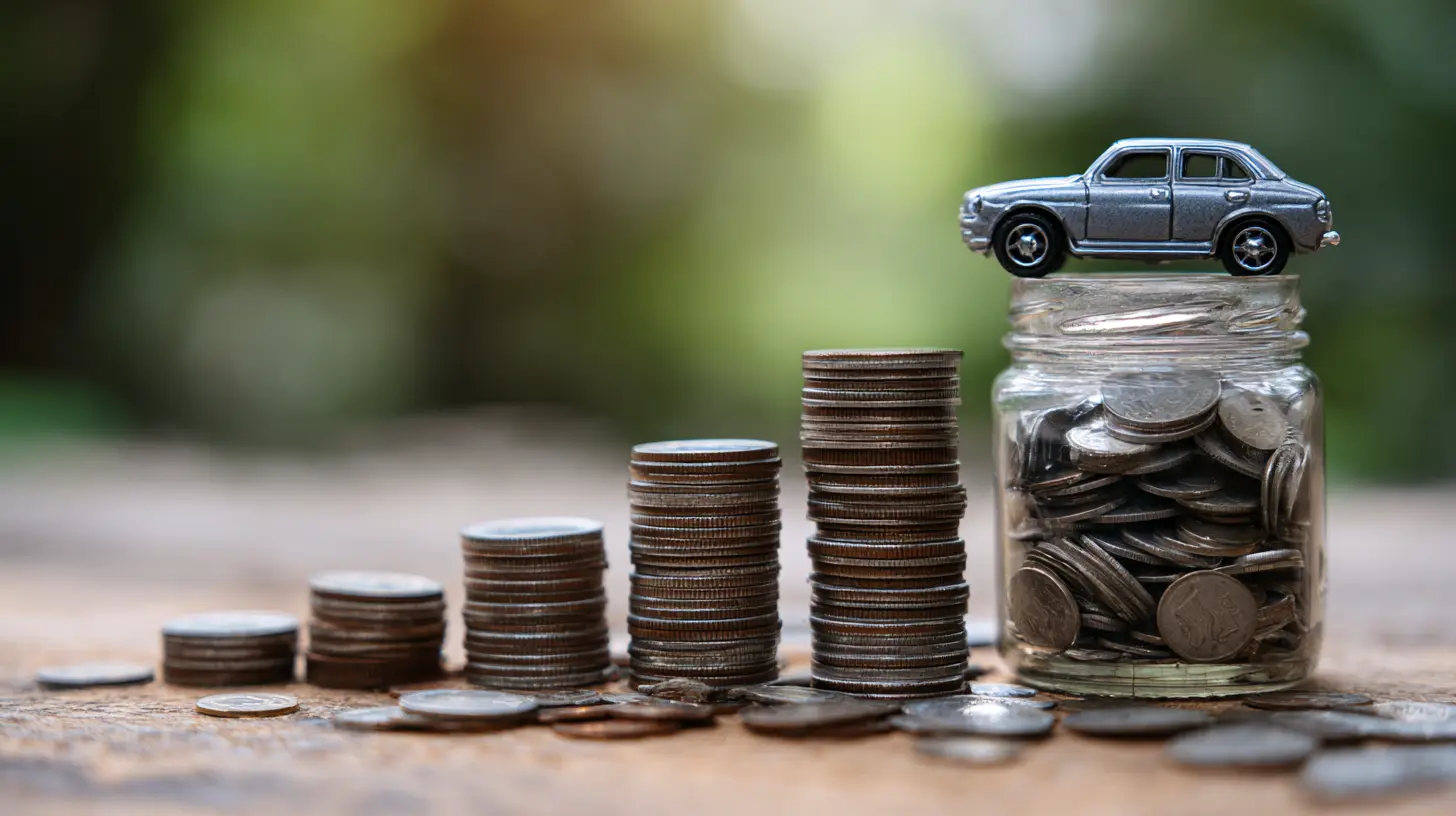
The 50/30/20 Rule Is a Starting Point, Not a Destination
You have probably heard of the 50/30/20 rule. Fifty percent of your income goes to needs, thirty percent to wants, and twenty percent to savings and debt. That rule is fine for people who are not in a crisis. But if you are serious about becoming debt-free, twenty percent is not enough.Here is the uncomfortable truth. When you are in debt, your wants should not get thirty percent of your income. That is a luxury you have not earned yet. You are borrowing from your future self to fund your present self. The budget should reflect a wartime mentality, not a peacetime one.
Consider a real example. You take home $4,000 a month. Under the 50/30/20 rule, you put $800 toward debt and savings. That is good. But if you tighten your wants to fifteen percent, you free up $600 more. Now you have $1,400 going toward debt. That is a seventy-five percent increase in your payoff speed. The same income, the same bills, just a different allocation.
The point is not to live like a monk forever. The point is to live like a monk for a season. The faster you pay off debt, the faster you can return to a normal lifestyle. Every month you delay is a month you pay interest for nothing.

Zero-Based Budgeting: The Most Powerful Tool for Debt Payoff
If you want to accelerate your journey, stop using a percentage-based budget and start using a zero-based budget. This means every single dollar of income is assigned a job. You give every dollar a name. Rent, groceries, gas, insurance, debt payment, even fun money. When you are done, your income minus your expenses equals zero.This is not about spending everything. It is about being intentional. A zero-based budget forces you to look at every dollar. It prevents the vague category of miscellaneous spending that silently eats your money. Most people who fail at debt payoff do not fail because they earn too little. They fail because they do not know where their money goes. A zero-based budget removes that excuse.
Here is how to do it practically. At the start of the month, write down your expected income. Then list every fixed expense. Then list variable expenses like food and gas. Then assign a specific amount to debt. Whatever is left, even if it is $47, assign it to debt as well. Do not leave a remainder. If you have $47 unassigned, you will spend it on something you do not remember by next week. Give it a job.
The trade-off is that this takes time. You need to track every purchase. You need to check your budget daily. That is annoying. But it works. The annoyance is the price of freedom.
The Envelope System: Going Old School to Win the New School Game
There is a reason your grandparents used envelopes. It works. The envelope system involves taking cash out for specific categories and putting it in physical envelopes. When the envelope is empty, you stop spending in that category.This sounds ridiculous in a digital age. But the psychology is powerful. Swiping a card is painless. Handing over cash is painful. That pain makes you think twice. It makes you pause. And that pause is exactly what you need to avoid impulse purchases.
For debt payoff, use the envelope system for your variable spending categories. Food, entertainment, clothing, eating out. When the envelope is empty, you cook at home. You watch a movie on your couch. You wear what you have. This creates a hard limit that a digital budget cannot enforce.
The downside is inconvenience. Cash is not always accepted. You have to go to an ATM. You have to carry physical money. But if you are drowning in debt, convenience is not your priority. Survival is. The envelope system is a survival tool.
The Hidden Leaks: Subscriptions, Fees, and the Death by a Thousand Cuts
Most budgets fail because they focus on the big numbers and ignore the small ones. A $15 monthly subscription does not seem like a problem. But ten of those subscriptions are $150 a month. That is $1,800 a year. That is real money that could be paying off your car loan.Audit your bank statements for the last three months. Look for recurring charges. You will be shocked by what you find. Old gym memberships you forgot to cancel. Streaming services you barely use. App subscriptions that auto-renewed. Insurance policies that overlap. Bank fees for accounts you do not maintain.
Here is a specific example. A woman I know was paying $9.99 a month for a cloud storage service she had not used in two years. She was also paying $12.99 for a music streaming service she never opened. She was paying $7.99 for a meditation app she downloaded once. That is $30.97 a month. Over two years, that is over $740. She had been paying that money while carrying $8,000 in credit card debt at 22 percent interest. That $740 could have saved her over $1,000 in interest charges.
The lesson is simple. Small leaks sink big ships. Your budget should include a monthly subscription audit. Cancel everything you do not use. If you are not sure, cancel it anyway. You can always resubscribe later. The inconvenience of re-subscribing is a small price to pay for the money you save.
The Minimum Payment Trap: Why You Must Break the Habit
The credit card statement says minimum payment due: $35. That number is designed to keep you in debt for decades. It is not a suggestion. It is a trap.Here is the math. If you owe $5,000 on a card with a 20 percent interest rate and you only pay the minimum, it will take you over 25 years to pay it off. You will pay over $9,000 in interest alone. That means you will pay almost three times what you borrowed. That is not a loan. That is a lifetime sentence.
Your budget must treat the minimum payment as the floor, not the target. The goal is to pay as much as you possibly can. Even an extra $50 a month cuts years off your payoff time. An extra $100 a month cuts it in half.
The reason this works is because interest is calculated on the average daily balance. When you pay more than the minimum, you reduce the principal faster. That reduces the balance on which interest is calculated. It is a downward spiral, but in a good way. The more you pay, the less interest accrues, which means more of your next payment goes to principal, which means the balance drops even faster.
The Emergency Fund: The Budget Item That Saves You from Relapse
Here is a counterintuitive truth. If you put every single dollar toward debt, you will likely fail. Why? Because life happens. Your car breaks down. Your dog gets sick. Your roof leaks. If you have no cash, you put that emergency on a credit card. Now you have new debt on top of the old debt. You feel defeated. You give up.The solution is a small emergency fund. Before you go all-in on debt payoff, save $1,000 or one month of expenses, whichever is larger. This is not an investment. It is a shield. It protects your debt payoff plan from life's surprises.
The trade-off is that this slows you down at the start. You are not paying extra on debt for the first few months. But the alternative is worse. Without the buffer, you are one flat tire away from a relapse.
Once you have the emergency fund, do not touch it unless it is a true emergency. A sale at your favorite store is not an emergency. A birthday gift is not an emergency. A flat tire is an emergency. A medical bill is an emergency. Define what qualifies before you need it.
The Income Side: Budgeting Is Not Just About Cutting
Most budgeting advice focuses on spending less. That is half the battle. The other half is earning more. If you are in serious debt, cutting your expenses can only take you so far. At some point, you need to increase your income.Your budget can help you identify the gap. If you are spending $3,000 a month and earning $3,000 a month, you have no room to accelerate. You need more money. That means a side hustle, a part-time job, overtime, or selling things you no longer need.
Here is a practical approach. Look at your budget and find the difference between your income and your essential expenses. That difference is your debt payoff power. If it is too small, you have two choices. Cut more or earn more. Most people can do both.
Selling unused items is a fast way to get cash. That old guitar, the exercise equipment collecting dust, the designer bags you never carry. List them online. Use the money for a lump sum debt payment. A lump sum payment is powerful because it immediately reduces your principal. It does not get spread out over months. It hits the balance all at once.
A side hustle is slower but more sustainable. Dog walking, tutoring, freelance writing, delivery driving. The key is to dedicate one hundred percent of the side hustle income to debt. If you let it blend into your regular spending, it disappears. The budget should have a line item for side hustle income and a matching line item for debt payment.
The Psychological Shift: From Scarcity to Strategy
The biggest change that happens when you start budgeting is not financial. It is mental. You stop feeling like a victim of your circumstances. You start feeling like a strategist. That shift is what keeps you going.Debt makes you feel powerless. Every bill is a reminder of a past mistake. But a budget is a plan for the future. It takes that same money and gives it a purpose. You are no longer wondering where your money went. You are telling it where to go.
This is why budgeting accelerates your debt-free journey. It is not just the extra money you find. It is the motivation you build. When you see your debt balance drop every single month, you get addicted to the progress. You want to pay more. You want to find more money. You start making better choices without even thinking about it.
The opposite is also true. Without a budget, you drift. You pay the minimum, you spend the rest, and you wonder why you are not making progress. The debt stays the same. The interest keeps growing. And you feel stuck.
Common Mistakes That Sabotage Your Budget
Even with the best intentions, people make mistakes. Here are the most common ones and how to avoid them.The first mistake is being too strict. You set a budget of zero dollars for entertainment. You last two weeks. Then you binge spend $300 on a night out because you feel deprived. The budget fails. The solution is to include a realistic amount for fun. It does not have to be large. But it has to exist. A budget that allows zero joy is a budget that will not survive.
The second mistake is not tracking small purchases. You budget $400 for groceries, but you also buy coffee every morning, a snack at the gas station, a soda at work. These are not groceries. They are separate categories. If you do not track them, you will blow your budget without realizing it. The solution is to track every single purchase, no matter how small. Use a spreadsheet, an app, or a notebook. Just track it.
The third mistake is ignoring irregular expenses. Car insurance is due every six months. Property taxes are due once a year. Your budget needs to account for these. Divide the annual cost by twelve and set aside that amount every month. Otherwise, you will be hit with a surprise bill that derails your debt payoff plan.
The fourth mistake is comparing yourself to others. Your friend has no debt and goes on vacation twice a year. You are in debt and cannot afford a weekend trip. That comparison is poison. Your budget is your plan, not theirs. Focus on your own numbers.
When Budgeting Is Not Enough: The Hard Truth
There are situations where budgeting alone will not get you out of debt. If your debt is larger than your annual income, if you are being sued, if your wages are being garnished, if you cannot make minimum payments, then a budget is not the solution. You need professional help.A credit counseling agency can negotiate with your creditors. A bankruptcy attorney can explain your options. These are not failures. They are strategic decisions. A budget is a tool for people who can still manage their debt. If you cannot, get help.
Also, if your debt is mostly from a medical emergency or job loss, do not beat yourself up. That is not a spending problem. That is a life problem. A budget can help you recover, but it cannot fix the underlying cause. Be kind to yourself while you work through it.
The Final Push: What Happens When You Are Debt-Free
When you make your last payment, something strange happens. You feel lighter. You feel taller. You feel like you can breathe. But then you face a new problem. What do you do with all that extra money?The answer is not to spend it. The answer is to redirect it. Take the payment you were making on your debt and put it into savings. Build a full emergency fund of three to six months of expenses. Then start investing. Then start saving for goals.
This is the true power of budgeting. It is not just about getting out of debt. It is about building a system that keeps you out. The budget does not end when the debt ends. It evolves. It becomes a tool for wealth building instead of debt elimination.
The habits you build during your debt-free journey, tracking spending, avoiding impulse purchases, automating payments, these habits will serve you for the rest of your life. That is the real return on investment. Not just the interest you saved, but the person you became.
A Final Word on Starting Today
You do not need a perfect budget to start. You need a rough budget. You need to know your income, your fixed expenses, and your debt payments. That is enough to begin. You will refine it as you go. You will make mistakes. You will overspend some months. That is normal. The key is to keep going.Start with a simple list. Write down your debts from smallest to largest. Write down your minimum payments. Write down your take-home pay. Then subtract your essential expenses. Whatever is left, throw it at the smallest debt. That is your first step.
Do not wait for the first of the month. Do not wait for a new year. Do not wait until you feel ready. Start today. Open a spreadsheet or take out a piece of paper. The journey to debt-free is not about willpower. It is about direction. A budget gives you that direction. And once you have it, the only way is forward.
all images in this post were generated using AI tools
Category:
Paying Off DebtAuthor:

Yasmin McGee
Discussion
rate this article
2 comments
Faryn Estes
Oh sure, because staring at spreadsheets all day is exactly what we all dream of doing. Who needs spontaneous dinners or fun when you can budget your way to freedom?
September 9, 2026 at 4:06 AM
Thornefield Strickland
This article raises some intriguing points about budgeting and its impact on becoming debt-free. I wonder how different budgeting methods compare in effectiveness. Could tracking expenses versus using apps really change the pace of repayment? I'm eager to explore practical steps that can make a difference in this journey.
September 5, 2026 at 4:29 AM
Yasmin McGee
Thanks for your insights! Different budgeting methods can definitely influence repayment speed. Tracking expenses manually can provide awareness, while apps may streamline the process. Testing out both could reveal what works best for you.