How Digital Wallets Are Quietly Replacing Your Physical Wallet
16 September 2026
Something strange happened on the way to the coffee shop. The ritual of pulling out a leather billfold, flipping past loyalty cards and receipts, and digging for a debit card has been quietly disappearing. In its place, a phone taps a terminal, a watch beeps, and the transaction is done before the barista finishes writing a name on a cup. No one announced this shift. There was no single moment when the physical wallet died. It simply lost its monopoly, one small convenience at a time.
That quietness is exactly what makes the change worth examining. Revolutions in money tend to be loud. The move from cash to cards came with decades of debate about security and fraud. The rise of online banking triggered fears about branch closures and digital divides. Digital wallets, by contrast, slipped into daily life through the back door of habit. You added a card to your phone "just in case." Then you used it once. Then you stopped carrying the physical version. Six months later, you noticed your wallet had become a place for receipts and a single emergency twenty.
This article looks at how that transition actually works, why it has been so smooth, where it still fails, and what you should consider before you empty out your leather bifold for good.
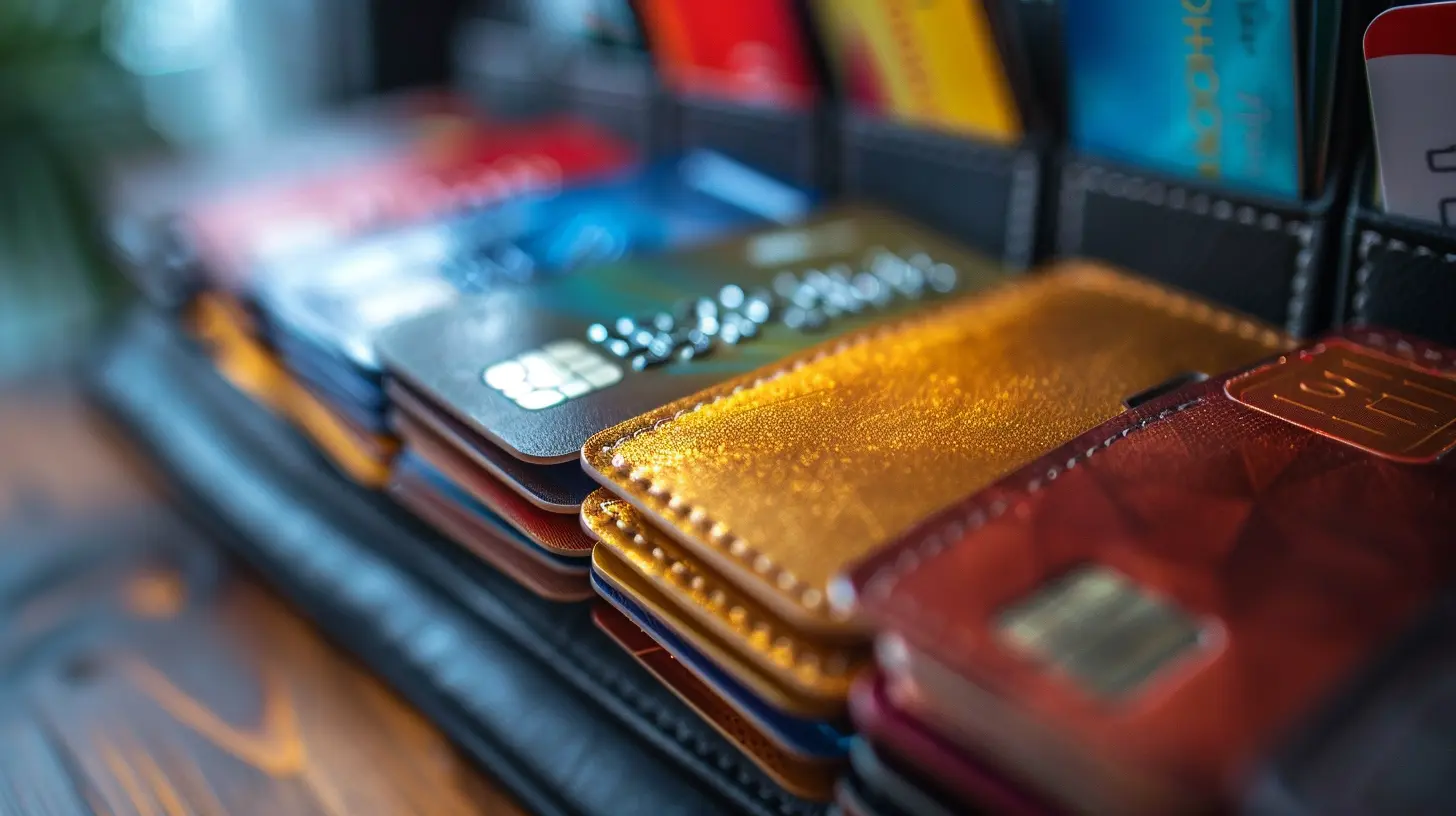
What a Digital Wallet Actually Is
The term gets used loosely, so it helps to be precise. A digital wallet is a software system that stores payment credentials, and sometimes identity documents, tickets, and keys, on a device you carry. That device is usually a smartphone or a smartwatch. The wallet itself is not a bank. It does not hold your money in the way a checking account does. It holds a token or a representation of your payment method, and it communicates with the underlying financial institutions when you pay.There are three broad categories, and they behave differently.
Device-based wallets live inside the operating system of your phone or watch. Apple Pay, Google Wallet, and Samsung Wallet are the best-known examples. These use a secure chip inside the device to store encrypted payment credentials. When you tap to pay, the terminal receives a one-time token, not your actual card number.
Merchant or app-based wallets live inside a specific company's app. PayPal, Venmo, Cash App, and similar services fall here. You fund them from a bank account or card, and you pay either within the app or through a linked checkout. The money often sits in an intermediate balance.
Cryptocurrency wallets store keys that control digital assets on a blockchain. They are a different animal entirely, with different risks and use cases, and they deserve their own discussion. For most people reading this, the first two categories are what matter day to day.
Understanding the distinction matters because the security model, the consumer protections, and the failure modes are not the same. A device wallet is essentially a secure element plus a tokenization service. An app wallet is a prepaid balance plus a login. Treating them as interchangeable is one of the most common mistakes people make.
Why the Shift Feels Invisible
Digital wallets spread because they solved a problem most people did not know they had. The problem was not "I need to pay for things." Cards already did that well. The problem was friction at the margins.Consider what happens when you pay with a physical card. You reach for your wallet. You find the right card. You insert or tap it. You wait for approval. You take it back. You put it away. Each step is small, but together they add up to maybe fifteen or twenty seconds, plus the cognitive load of tracking where your wallet is.
A phone payment removes several of those steps. The phone is already in your hand, because you were probably looking at it anyway. You double-click a button or hold it near the terminal. Authentication happens through your face or fingerprint. The transaction completes. The whole thing takes a few seconds and requires almost no thought.
That is the mechanism behind the quietness. Digital wallets did not win by being dramatically better in a way that demanded attention. They won by being marginally easier in a way that compounded across hundreds of transactions. Convenience that accumulates is far more powerful than convenience that announces itself.
There is also a generational layer. People who grew up with smartphones treat the phone as the default interface for everything. For them, pulling out a plastic card feels as archaic as writing a check. People who grew up with cash and cards often keep both systems running in parallel, using whichever feels appropriate. Neither approach is wrong. But the direction of travel is clear, and it is being driven by habit formation rather than marketing.
The Security Story, Told Honestly
The most common objection to digital wallets is security. It is also the area where the conventional wisdom is most outdated.When you add a card to a device wallet, the network typically replaces your real card number with a device-specific token. That token is stored in a secure element, a dedicated chip designed to resist tampering. When you pay, the merchant receives the token, not your card number. If a merchant's systems are breached, your actual card number was never there to steal. This is a meaningful improvement over the physical card model, where a compromised terminal or a skimming device can capture your real number.
Authentication adds another layer. Most device wallets require a biometric check or a passcode before each transaction, at least above a certain amount. A lost phone is therefore not automatically a lost wallet. A lost physical card, by contrast, can be used by anyone who finds it until you notice and call your bank.
That said, the security picture is not uniformly rosy.
App-based wallets often rely on a username and password, sometimes with two-factor authentication. If your account is compromised, the attacker may be able to drain a balance or send payments. Consumer protections vary widely. Some services offer strong fraud guarantees. Others offer far less than a credit card would. Before you keep a large balance in any app, read the terms and understand what happens if someone gains access to your account.
Phishing and social engineering remain the dominant threat. An attacker does not need to break encryption if they can convince you to approve a payment or hand over a one-time code. Digital wallets make payments fast, and speed can work against you. A physical card requires you to be present with the card. A digital wallet can be triggered by a convincing message and a few taps.
Device loss and lockout are real concerns. If your phone is stolen and you cannot remotely wipe it, you may face a stressful window. Most platforms offer remote disabling, and your bank can usually suspend the token. But the process takes time and calm, neither of which is guaranteed in the moment.
The honest conclusion is that device wallets are generally more secure than physical cards for in-person payments, while app wallets vary from excellent to mediocre depending on the provider. The right move is not to avoid digital wallets but to choose them deliberately and configure them well.
What You Gain, and What You Give Up
Every payment method involves trade-offs. Digital wallets are no exception. Here is a clear-eyed comparison.What you gain:
- Speed at checkout, especially for small, frequent purchases.
- Reduced risk of card skimming at terminals.
- The ability to carry many cards without carrying many cards.
- Automatic records of transactions, often with merchant names and categories.
- Integration with loyalty programs, transit passes, and event tickets.
- Remote disablement if your device is lost.
What you give up:
- Dependence on a charged, working device.
- Some privacy, since transaction data flows through the platform provider.
- The ability to pay when a terminal does not accept contactless payments.
- The tactile certainty of seeing your card and knowing it is there.
- In some cases, the stronger dispute rights that come with credit cards.
The privacy point deserves emphasis. When you pay with a physical card, your bank sees the transaction. When you pay with a device wallet, your bank sees the transaction and the platform provider may see it too. That data can be used for recommendations, advertising, or product development. Whether that bothers you is a personal judgment. But it is a real cost, and it is rarely mentioned at the point of setup.
The dispute rights point is subtler. Credit cards in many countries offer strong legal protections for unauthorized charges and faulty goods. Digital wallets that sit on top of a credit card usually preserve those protections, because the underlying card is still the funding source. Wallets that draw from a stored balance or a bank account may offer weaker recourse. If you care about chargebacks and disputes, keep a credit card in the mix.
Practical Setup: Doing It Right
If you are going to use digital wallets, set them up with the same care you would apply to a bank account. A few habits make a large difference.Start with one device wallet and one card. Add your primary credit card to your phone's native wallet. Use it for a week. Get comfortable with the authentication flow and the terminal behavior. Do not add every card at once. Complexity breeds mistakes.
Turn on every available lock. Biometric authentication, a strong device passcode, and remote wipe should all be enabled before you add a payment method. If your device supports a dedicated secure element, use it. If your platform offers transaction notifications, turn them on. Real-time alerts are one of the best fraud detection tools available to ordinary people.
Keep a backup card. This is not nostalgia. It is risk management. Terminals fail. Phones run out of battery. Some merchants still do not accept contactless payments, and some countries rely on them far less than others. A single physical card in a pocket or bag costs you almost nothing and saves you an embarrassing moment.
Separate your spending. Consider using a dedicated card for digital wallet payments, distinct from the card you use for subscriptions and recurring bills. If the wallet card is ever compromised, you can freeze it without disrupting your entire financial life.
Review your app wallets quarterly. Check balances, remove cards you no longer use, and confirm that your recovery email and phone number are current. An old phone number on a payment account is a recipe for lockout.
Understand the funding source. Know whether your wallet draws from a credit card, a debit card, a bank account, or a stored balance. The answer determines your protections, your dispute options, and how quickly a problem can be resolved.
Common Mistakes and Misconceptions
A few beliefs about digital wallets are widespread and wrong."Digital wallets are less safe than cards." For device wallets, the opposite is usually true. Tokenization and biometric authentication reduce the attack surface compared to a plastic card. The risk shifts to your device and your habits, not the payment itself.
"If my phone dies, my money is gone." Your money is not on the phone. It is at your bank or in your account. The phone is a key, not a vault. Losing the key is inconvenient, not catastrophic, provided you have a backup payment method and can reach your bank.
"Digital wallets are only for tech people." The setup takes a few minutes and the interface is designed for mass use. If you can unlock your phone, you can pay with it.
"I need to keep every card in my wallet." You do not. Most people use two or three cards regularly. The rest can stay at home in a drawer, where they are safer anyway.
"Contactless payments are the same as digital wallet payments." They are related but distinct. A contactless card uses NFC to transmit your card number. A device wallet uses NFC to transmit a token. The user experience is similar. The security model is not.
"More wallets means more flexibility." In practice, spreading payments across five apps makes it harder to track spending, harder to dispute charges, and harder to secure your accounts. Consolidation is usually the better path.
Where Digital Wallets Still Struggle
It would be dishonest to present digital wallets as a universal replacement. There are situations where the physical card or cash remains the better tool.Rural and older infrastructure. Contactless terminals are common in many cities and rare in some regions. If you travel widely, a physical card is not optional.
Tips and small merchants. Some small businesses prefer cash for tips or to avoid processing fees. Respecting that preference is part of being a good customer.
Battery and connectivity. A dead phone is a dead wallet. A phone with no signal may still work for payments if the wallet supports offline tokens, but not all do. Do not assume.
High-value or unusual transactions. Large purchases, rentals, and some online checkouts still work more smoothly with a physical card or a direct bank transfer. The friction is there for a reason.
Legal and identity contexts. Some situations require a physical ID, a signature, or a card present. Digital wallets are expanding into identity, but adoption is uneven.
Privacy-sensitive users. If you object to platform-level visibility into your spending, a physical card or cash gives you more control.
The sensible approach is not to pick a side but to build a stack. Use a device wallet for everyday convenience. Keep a physical card for backup and edge cases. Keep a small amount of cash for the situations that still call for it. That stack covers almost everything life throws at you.
The Bigger Picture
The quiet replacement of the physical wallet is not really about payments. It is about interfaces. Money has always been shaped by the tools we use to move it. Coins made trade portable. Paper made it scalable. Cards made it convenient. Phones are making it ambient.That shift has consequences beyond the checkout line. When payments become invisible, spending becomes less salient. It is easier to tap than to count. That is a genuine risk, and it is worth building habits that counteract it. Weekly reviews of your transaction history, budgets that update in real time, and alerts for large purchases all help. The technology is neutral. The behavior around it is not.
There is also an opportunity. Digital wallets generate rich, structured data about how you spend. Used well, that data can help you understand your habits, catch fraud early, and make better decisions. Used passively, it just accumulates. The difference is whether you look at it.
Finally, the replacement is not complete, and it may never be. Physical wallets will persist for years, in the same way that checks persist despite decades of predictions about their demise. The point is not that one will eliminate the other. The point is that the default is changing, and the change is happening without much fanfare.
That is worth noticing. Quiet transitions are the ones that shape daily life most deeply, precisely because they do not demand your attention. The next time you tap your phone to pay, take a second to notice what you did not do. You did not open a wallet. You did not search for a card. You did not wait. That small absence, repeated a million times a day, is how a physical object becomes optional.
all images in this post were generated using AI tools
Category:
Digital WalletsAuthor:

Yasmin McGee