The Growing Threat of Deepfakes in Digital Banking
22 September 2026
Your bank spent millions on fraud detection. It taught you to spot phishing emails, avoid sketchy links, and never share your one-time password. All solid advice. But none of it prepares anyone for the moment a video call shows your own face asking to move a large sum of money.
That is the strange new reality of digital banking. Deepfakes have moved from internet curiosities to active fraud tools, and the financial sector is scrambling to keep pace. This article breaks down what is actually happening, why traditional security keeps missing the mark, and what banks and customers should do about it.
What Deepfakes Actually Are (And What They Are Not)
A deepfake is synthetic media, usually video or audio, generated or manipulated by machine learning models. The most common techniques involve generative adversarial networks, where two neural networks compete: one creates a fake, the other tries to detect it, and both improve over time. The result is footage or audio that can mimic a person's appearance, voice, and mannerisms with unsettling accuracy.A few clarifications matter here, because the term gets thrown around loosely.
First, not every manipulated video is a deepfake. Simple face swaps, speed changes, or filters are older tricks. Deepfakes specifically involve AI-generated content that can respond, adapt, and imitate in real time.
Second, deepfakes are not only about faces. Voice cloning is often the more dangerous variant in banking. A short audio sample, sometimes just a few seconds scraped from social media or a voicemail greeting, can be enough to train a model that sounds convincingly like a specific person.
Third, the technology is not inherently malicious. Film studios use it for de-aging actors. Medical researchers use synthetic data for training. The problem is that the same tools are cheap, accessible, and increasingly good enough to fool both humans and automated systems.
Why Banking Is a Prime Target
Banks sit at the intersection of three things criminals love: money, identity, and trust. If you can convincingly impersonate a customer, you do not need to break into a vault. You just need to ask nicely, in their voice, with their face.Several structural factors make financial institutions especially vulnerable.
Remote onboarding. Since the pandemic, most banks allow customers to open accounts through a smartphone. That process typically involves a selfie, a photo of an ID document, and a liveness check. Deepfake tools can now pass many of these checks, particularly older ones that rely on simple motion prompts like "turn your head" or "blink."
Voice-based authentication. Some banks still use voiceprints as a biometric factor for phone banking. Voice cloning undermines that entirely. If your voice is your password, and your voice can be copied, your password is public.
Video KYC. Know Your Customer rules in many jurisdictions allow video verification. A fraudster with a convincing deepfake and a stolen ID can potentially pass a live interview, especially if the agent on the other end is rushed or undertrained.
High-value transactions. Wire transfers, large withdrawals, and account changes are exactly the moments when banks want strong verification. They are also the moments when a well-timed deepfake does the most damage.
The Anatomy of a Deepfake Banking Scam
Understanding how these attacks unfold helps explain why they work. Most follow a similar arc.Stage 1: Reconnaissance
The fraudster gathers material. Social media videos, public speaking clips, podcast appearances, and voicemail greetings are all useful. The goal is to collect enough audio and visual data to train a model. For a corporate executive, this is often trivial. For a private individual, it may take more effort, but a single minute of clear audio can be enough for a convincing voice clone.Stage 2: Building the Fake
Modern tools can produce a working deepfake in hours, sometimes minutes. The fraudster does not need a Hollywood studio. A consumer-grade GPU and open-source software will do. Some services even offer deepfake-as-a-service, which lowers the technical barrier to near zero.Stage 3: The Approach
This is where the attack meets the bank. Common scenarios include:- A phone call to the bank's customer service line, using a cloned voice to request a password reset or a transfer.
- A video call to a relationship manager, impersonating a wealthy client who needs to move funds urgently.
- A remote account opening using a deepfaked selfie and a stolen identity document.
- A direct approach to a customer, impersonating a bank employee, to trick them into authorizing a transaction.
Stage 4: The Cash Out
Once the bank is convinced, the money moves. Recovery is difficult because the transaction is authorized, at least on the surface. The fraudster often routes funds through mule accounts and cryptocurrency exchanges to obscure the trail.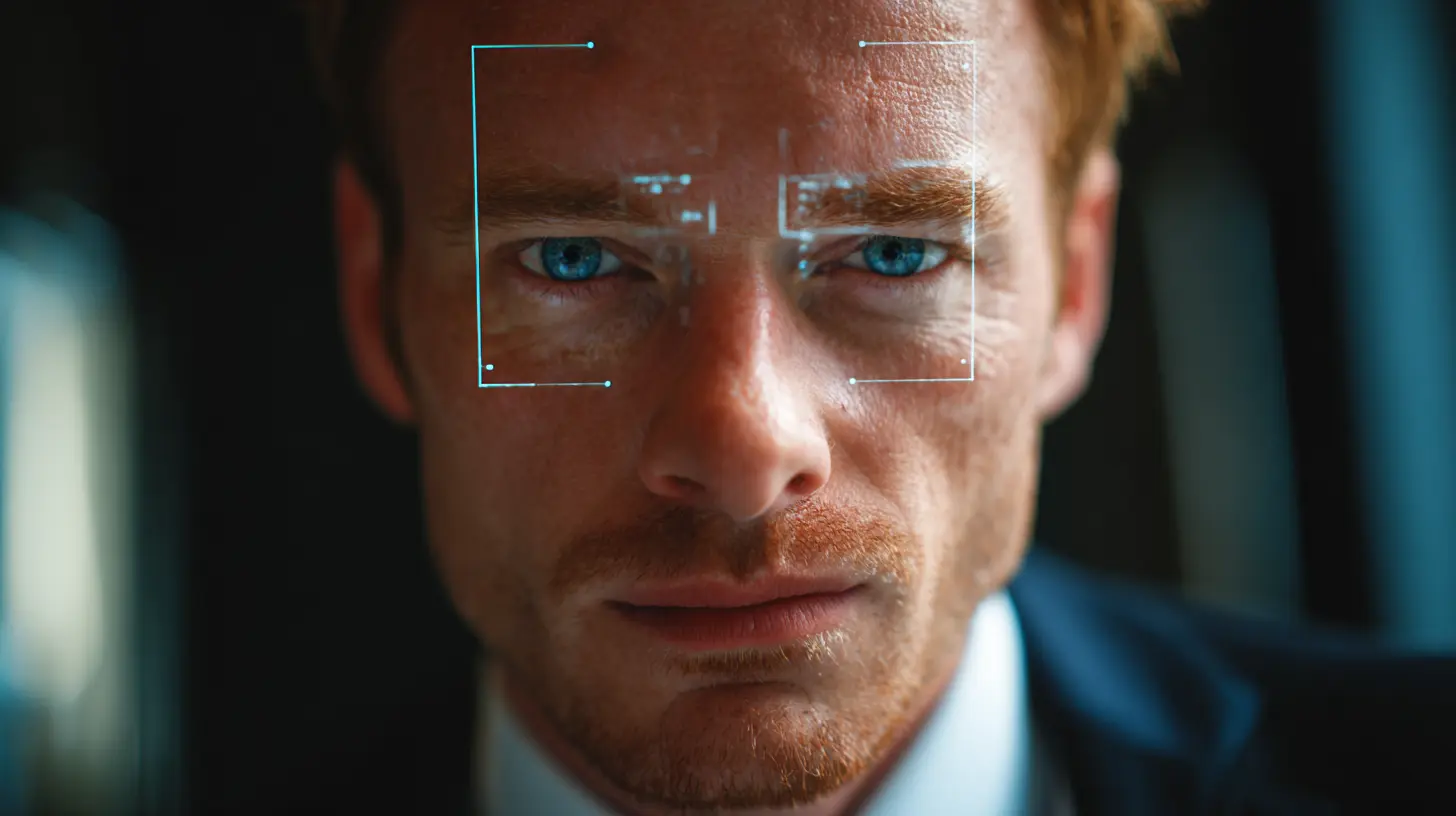
Why Traditional Security Keeps Missing This
Banks have layered defenses: passwords, one-time codes, device fingerprinting, behavioral analytics, and biometrics. Each was designed to solve a specific problem. Deepfakes slip through the gaps between them.Passwords and OTPs prove knowledge or possession, not identity. A fraudster who has already compromised those factors gains nothing from a deepfake. But a fraudster who has not compromised them can use a deepfake to convince a human agent to bypass them.
Biometrics were supposed to be the answer. The problem is that many biometric systems were designed to verify a live person, not to detect a synthetic one. Liveness detection that relies on simple challenges, like reading a phrase or moving in a certain way, can be defeated by modern generative models.
Human judgment is the weakest link. Bank employees are trained to be helpful. When a distressed customer calls, the instinct is to resolve the issue, not to interrogate them. Deepfakes exploit that empathy.
Behavioral analytics can flag unusual patterns, but a deepfake attack often looks normal on paper: the right person, the right account, the right request. The anomaly is in the medium, not the metadata.
Real-World Examples and What They Teach
Public reporting has documented several cases that illustrate the range of threats.In one widely reported incident, a finance worker at a multinational company was tricked into transferring a large sum after a video call in which multiple participants appeared to be colleagues, including the company's chief financial officer. The employee had been suspicious at first, but the realism of the call, combined with the apparent presence of trusted colleagues, overcame those doubts.
In another case, a bank in Hong Kong reportedly processed a fraudulent transaction after a customer service interaction involving a deepfaked identity.
These examples share a pattern: the attack succeeded not because the technology was perfect, but because it arrived at the right moment, in the right context, and exploited a human weakness. The lesson is not that deepfakes are unbeatable. It is that they do not need to be.
The Trade-Offs Banks Face
Fighting deepfakes is not a simple matter of buying better software. Every countermeasure carries costs, and those costs are not only financial.Friction Versus Security
Stronger verification means more steps for legitimate customers. If every transaction requires a video call with a live agent, customers will switch to a competitor that does not. If every login requires a hardware key, adoption drops. Banks must decide how much friction is acceptable, and the answer varies by customer segment and transaction type.Privacy Versus Detection
Some deepfake detection methods analyze subtle signals in video and audio, such as inconsistencies in lighting, pulse, or micro-expressions. Others rely on metadata, device signals, or behavioral patterns. The more invasive the detection, the more privacy concerns it raises. Customers may not want their bank analyzing their face in detail, even if the intent is protective.Speed Versus Accuracy
Real-time detection is hard. Many deepfake detection models work well on recorded media but struggle with live video, where latency matters and the fraudster can adapt. Banks that prioritize speed may accept higher false positive rates; those that prioritize accuracy may slow down transactions.Centralization Versus Resilience
A single, centralized detection system is easier to manage but becomes a single point of failure. A distributed approach is more resilient but harder to coordinate. There is no universally correct answer.What Actually Works: Detection and Defense
No single technology stops deepfakes. The most effective strategies combine multiple layers, each covering the weaknesses of the others.Multi-Factor, Multi-Modal Verification
Instead of relying on one biometric, combine several. A voiceprint plus a device signal plus a behavioral pattern plus a knowledge factor is much harder to fake than any one alone. The key is that the factors should be independent. If a fraudster can spoof your voice and your face, adding a third biometric of the same type does not help.Liveness Detection That Actually Works
Modern liveness detection uses challenges that are difficult for generative models to replicate in real time. These include:- Random micro-movements that require genuine 3D understanding of a face.
- Depth sensing using infrared or structured light.
- Analysis of blood flow patterns in the skin.
- Challenges that require real-time interaction with unpredictable elements.
The important caveat: these methods are not foolproof. They raise the bar, but a determined attacker with enough resources can sometimes clear it.
Out-of-Band Verification
For high-value transactions, banks should verify through a separate channel. If a request comes in via video call, confirm it via a phone call to a pre-registered number, or through an in-app confirmation that requires a hardware-backed key. The principle is simple: never trust a single channel for a high-stakes decision.Human Training and Escalation Protocols
Bank employees need clear, specific training on deepfakes. That means:- Recognizing the signs of a synthetic interaction, such as unnatural eye movement, slight audio lag, or inconsistencies in background details.
- Knowing when to escalate to a fraud specialist rather than trying to resolve the issue alone.
- Having the authority to pause a transaction without fear of reprimand.
The last point is critical. If employees are penalized for slowing down legitimate transactions, they will not slow down fraudulent ones either.
Continuous Monitoring and Anomaly Detection
Deepfake attacks often involve subtle deviations from normal behavior. A customer who never calls suddenly calls. A transaction that usually takes place on a mobile app is requested via a branch visit. Monitoring these patterns and flagging them for review can catch attacks that slip past biometric checks.
Common Mistakes and Misconceptions
A few beliefs about deepfakes cause more harm than good."Deepfakes are obvious if you look closely." Not anymore. Early deepfakes had visible artifacts, like unnatural blinking or mismatched skin tones. Modern models have largely resolved these issues. Assuming you can spot a fake by eye is dangerous.
"Biometrics solve the problem." Biometrics are a tool, not a solution. They can be spoofed, and they can be bypassed through social engineering. Treating them as a silver bullet leads to complacency.
"This only affects celebrities and executives." Anyone with a public online presence is a potential target. That includes everyday people with active social media accounts.
"Banks will catch it." Banks are improving, but no institution is immune. Customers share responsibility for their own security.
"Regulation will fix it." Regulation helps, but it lags behind technology. Waiting for perfect rules before taking action is a losing strategy.
What Customers Should Do
You do not need to be a cybersecurity expert to reduce your risk. A few practical habits go a long way.Reduce your public audio and video footprint. You cannot erase everything, but you can limit the high-quality samples available. Consider privacy settings on social media, and think twice before posting long videos of yourself speaking clearly.
Agree on a verification phrase with family and close contacts. If someone calls claiming to be a relative in trouble, ask a question only they would know. Voice cloning cannot replicate shared memories.
Be skeptical of urgency. Fraudsters rely on pressure. If someone is pushing you to act immediately, that is a red flag, regardless of how convincing they sound.
Use hardware security keys for high-value accounts. A physical key cannot be cloned by a deepfake. It is one of the strongest defenses available to individuals.
Verify through a second channel. If you receive a suspicious request, hang up and call back on a number you trust. Do not use the number provided in the request.
Report suspicious interactions. Even if nothing was lost, reporting helps banks and regulators understand the threat landscape.
What Banks Should Do
For financial institutions, the stakes are higher and the responsibilities broader.Invest in detection, but do not rely on it alone. Detection models improve constantly, but so do generative models. Treat detection as one layer among many.
Design for failure. Assume that some deepfakes will get through. Build processes that limit the damage when they do, such as transaction limits, cooling-off periods, and manual review for high-risk actions.
Train staff continuously. Deepfake technology evolves quickly. Annual training is not enough. Regular simulations and updates help employees stay sharp.
Collaborate with regulators and peers. Deepfakes are an industry-wide problem. Sharing threat intelligence and best practices benefits everyone.
Be transparent with customers. Explain what you are doing to protect them, and what they should do to protect themselves. Trust is a bank's most valuable asset, and it is earned through honesty, not silence.
The Road Ahead
Deepfakes will get better. That is not a prediction; it is a trajectory. As generative models improve, the gap between real and synthetic media will continue to narrow. Banks that treat this as a temporary problem will be caught off guard. Those that treat it as a permanent shift in the threat landscape will be better prepared.The good news is that the fundamentals of security have not changed. Verify identity through multiple independent channels. Assume that any single factor can be compromised. Design systems that fail safely. Train people to recognize and respond to threats. None of this is glamorous, but it works.
The bad news is that deepfakes exploit a vulnerability that technology alone cannot fix: human trust. We are wired to believe what we see and hear. That instinct served us well for most of history. In a world where faces and voices can be manufactured, it needs to be tempered with healthy skepticism.
The banks that thrive in this environment will be those that combine strong technology with clear communication and a culture that rewards caution over speed. The customers who stay safe will be those who understand that convenience and security are always in tension, and who choose their trade-offs deliberately.
Deepfakes are not the end of digital banking. They are a stress test. How the industry responds will determine whether that test is passed or failed.
all images in this post were generated using AI tools
Category:
Banking SecurityAuthor:

Yasmin McGee