The Most Common Lies We Tell Ourselves About Debt
28 August 2026
Let's be honest. Debt is not a math problem. It is a psychological thriller starring you, your credit card, and a villain named "Minimum Payment Due." We all know the numbers. We all know the interest rates. Yet we still convince ourselves that a 0% APR balance transfer is a personality trait and that "future me" will somehow be a completely different, financially responsible human being.
Spoiler: future me is just current me with more gray hairs and the same spending habits.
I have spent years watching people do mental gymnastics to justify financial decisions that would make an economist weep. I have done some of those gymnastics myself. So let's tear down the most common lies we tell ourselves about debt, one by one, with a healthy dose of humor and a sharp knife of reality.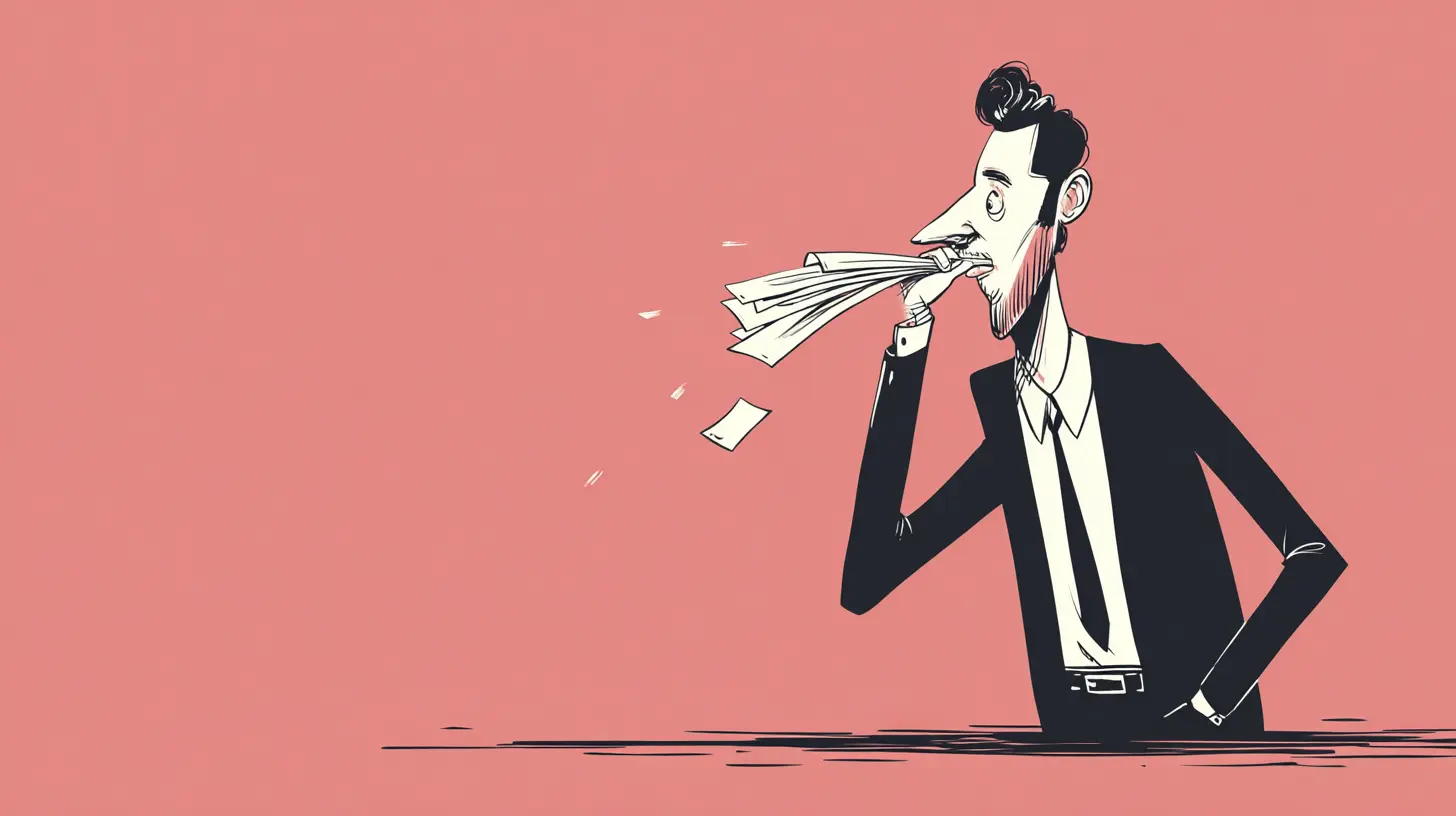
Lie #1: "I'll Pay It Off When I Get a Raise"
This is the granddaddy of all debt delusions. The raise is always coming. It is perpetually six months away. It is the financial equivalent of "I'll start my diet on Monday."The problem is that when you get a raise, your lifestyle also gets a raise. You buy a nicer car. You eat at nicer restaurants. You start ordering the avocado toast without checking the price. Suddenly, that extra $500 a month is already spoken for, and your debt is still sitting there like an uninvited guest who refuses to leave.
Why this lie is dangerous: It outsources your financial discipline to a future event that may never happen. You are betting your solvency on a promotion, a bonus, or a market shift. When that event does not materialize, you are left with the same debt and the same excuses.
What actually works: Treat a raise as a windfall, not an income increase. Before you see a single extra dollar in your bank account, set up an automatic transfer to your debt payment. If you never see the money, you never miss it. This is called "paying yourself first," and it is the only way to break the cycle of lifestyle inflation.
The trade-off: You will feel poorer than your colleagues who are spending their raises on new gadgets. But you will also feel richer when your debt is gone and theirs is not.
Lie #2: "Minimum Payments Are Fine"
The credit card statement says "Minimum Payment Due: $35." You think, "Great, that is manageable." What the statement does not say is, "If you keep paying this, you will be paying for this pizza in 2047, and the pizza will have cost you $1,200."Minimum payments are not a repayment plan. They are a subscription to debt. You are paying the bank for the privilege of staying in debt. It is like going to the gym and only doing the warm-up stretches, then wondering why you never get in shape.
Why this lie is dangerous: It creates the illusion of progress. You see the balance drop by a few dollars each month, and you feel good about yourself. But the interest is compounding in the background, eating away at your principal. You are running on a treadmill while the bank is raising the speed.
What actually works: Calculate the true cost of minimum payments. Use a simple debt calculator. You will be shocked. If you owe $5,000 at 22% APR and only pay the minimum, it will take you over 20 years to pay off, and you will pay more than double the original amount. That is not a debt. That is a second mortgage on a sandwich.
The alternative: Pay at least double the minimum, or better yet, use the "debt avalanche" method. List all your debts by interest rate, pay the minimum on everything except the highest-rate one, and throw every extra dollar at that one. Once it is gone, move to the next. It is not sexy, but it is effective.
Lie #3: "I Deserve This"
This is the most emotionally charged lie. You work hard. You are stressed. You deserve a vacation, a new laptop, a nice dinner. The credit card is just a tool to help you have the life you deserve.Here is the truth: You do deserve nice things. But you do not deserve to pay 25% interest on them for the next five years. That is not treating yourself. That is punishing yourself.
Why this lie is dangerous: It conflates self-care with self-indulgence. Retail therapy is not therapy. It is a temporary dopamine hit that wears off before the statement arrives. The guilt you feel afterward is not a sign of weakness; it is a sign that you know better.
What actually works: Separate your "deserve" spending from your debt repayment. Create a small, guilt-free budget for fun money. Maybe it is $50 a month. Spend it on anything you want, no questions asked. But once it is gone, it is gone. This gives you the psychological relief of treating yourself without the financial hangover.
The trade-off: You will have to say no to some things. But saying no to a $200 dinner now is easier than saying no to a $400 monthly payment later.
Lie #4: "Debt Consolidation Will Fix Everything"
Consolidation is not a cure. It is a bandage. And if you do not change the behavior that caused the debt, you will just end up with a bigger bandage over a bigger wound.I have seen people consolidate $20,000 of credit card debt into a personal loan, feel great about the lower monthly payment, and then run up another $15,000 on the now-empty credit cards. Six months later, they have $35,000 of debt and a "why did this happen to me" look on their face.
Why this lie is dangerous: It confuses the symptom with the disease. The disease is overspending. The symptom is high interest. Consolidation only treats the symptom. If you do not fix the overspending, you are just rearranging deck chairs on the Titanic.
What actually works: Use consolidation only if you have a clear plan. First, close the credit card accounts you are consolidating. Do not keep them open "for emergencies." That is like keeping a bottle of whiskey in the house for "special occasions" when you are an alcoholic. Second, set up automatic payments on the new loan. Third, commit to using cash or debit for at least six months.
The trade-off: You might take a hit on your credit score temporarily. But a temporary dip is better than a permanent spiral.
Lie #5: "I Can Use Debt to Build My Credit Score"
This is technically true, but it is like saying you can use a chainsaw to trim your nails. It works, but you are one slip away from disaster.The credit score system is designed to reward borrowers who use credit responsibly. That means carrying a small balance and paying it off in full every month. It does not mean carrying a large balance and paying interest forever.
Why this lie is dangerous: It gives you permission to keep debt around. You convince yourself that the debt is "working for you" because your score goes up. But a credit score is not wealth. It is a measure of how well you can borrow money. Having a high score while being deeply in debt is like having a great GPA while being deeply unhappy.
What actually works: If you want to build credit, use a credit card for a recurring small expense, like a streaming subscription, and set it to auto-pay in full every month. That is the entire strategy. You do not need to carry a balance. You do not need to pay interest. You just need to show the system that you can borrow and repay.
The trade-off: Your score will not skyrocket overnight. But it will grow steadily and safely, without the stress of a growing balance.
Lie #6: "I'll Just Do a Balance Transfer"
The 0% balance transfer offer arrives in the mail. It looks like a gift from the gods. You move your $8,000 balance over, pay no interest for 18 months, and feel like a genius.Then the 18 months end, and the rate jumps to 24%. And you have only paid off $1,000 because you kept using the old card for "just this one thing."
Why this lie is dangerous: Balance transfers are a tool, not a solution. They give you a window of opportunity, but they do not give you discipline. If you do not have a realistic plan to pay off the balance before the promotional period ends, you are just delaying the pain and adding a transfer fee on top.
What actually works: Before you transfer, calculate the monthly payment you need to make to wipe out the balance before the promo ends. If you cannot afford that payment, do not transfer. Instead, focus on the avalanche method and consider a side hustle to generate extra cash.
The trade-off: Balance transfers can be useful for a one-time emergency, like a medical bill. But they are not a way of life. Treat them like a surgery, not a diet.
Lie #7: "Debt Is Just a Tool"
This is the most sophisticated lie. It is often told by people who are "financially savvy" and have read a few books on investing. They say, "Good debt is debt that makes you money. Bad debt is debt that costs you money. I only use good debt."That is true for a mortgage on a rental property or a business loan. It is not true for a new iPhone, a vacation, or a wedding. But the lie is that we convince ourselves that our consumer purchases are "investments."
Why this lie is dangerous: It blurs the line between investment and consumption. A $2,000 laptop is not an investment unless it directly generates income. A $5,000 vacation is not an investment in your mental health; it is a vacation. You are fooling yourself if you think otherwise.
What actually works: Before you use debt for anything, ask yourself: "Will this asset generate more money than the interest costs?" If the answer is no, it is consumption. If it is consumption, you should be saving for it in cash, not borrowing for it.
The trade-off: You will miss out on some "opportunities" that are actually just expenses in disguise. But you will also miss out on the stress of paying for a good time long after the good time is over.
Lie #8: "My Debt Is Different"
Everyone thinks their debt is special. "Student loans are good debt." "Medical debt is not my fault." "A car loan is necessary because I need to get to work."Some of these are true. Some are not. But the lie is that we use these justifications to avoid taking responsibility for the parts we can control.
Why this lie is dangerous: It creates a hierarchy of debt where some debts are "acceptable" and others are "bad." This leads to ignoring the acceptable ones while they grow. A student loan is still a loan. A car loan is still a loan. They all have interest rates and monthly payments.
What actually works: Treat all debt as debt. Rank it by interest rate and pay it off in that order, regardless of what it was for. The emotional attachment you have to your "good debt" is irrelevant to the math.
The trade-off: You might have to accept that you made a mistake with a car purchase or a degree that did not pay off. That is painful. But it is also freeing.
Lie #9: "I'll Tackle It Next Month"
Procrastination is the silent killer of financial plans. We all know the feeling. The statement comes, we look at it, we feel a knot in our stomach, and we put it down. We say, "I will deal with this after the holidays, after the move, after the wedding."But there is always a next month. And the debt is always growing.
Why this lie is dangerous: It turns a manageable problem into a crisis. A $3,000 balance is annoying. A $10,000 balance is stressful. A $20,000 balance is paralyzing. The longer you wait, the bigger the problem becomes, and the harder it is to start.
What actually works: Start today, even if it is small. Call your credit card company and ask for a lower interest rate. It takes ten minutes and often works. Set up a $50 automatic payment. Just start. The momentum matters more than the amount.
The trade-off: You will have to face your numbers. That is uncomfortable. But it is also the first step to freedom.
Lie #10: "If I Ignore It, It Will Go Away"
This is the most desperate lie. We all know, deep down, that debt does not go away. It does not get bored and leave. It does not get tired of chasing you. It is the most loyal companion you will ever have.But ignoring it feels better, at least for a while. Until the collection calls start. Until the wage garnishment. Until the lawsuit.
Why this lie is dangerous: It turns a financial problem into a legal problem. Once you ignore a debt long enough, the creditor can sue you, get a judgment, and start taking money directly from your paycheck. At that point, you have lost control.
What actually works: If you are being hounded by collectors, do not hide. Answer the phone, ask for validation of the debt, and negotiate a settlement. Many creditors will accept less than the full amount if you can pay a lump sum. But you have to engage.
The trade-off: You will have to have uncomfortable conversations. But a short conversation with a collector is better than a long conversation with a lawyer.
The Real Way Out
Here is the uncomfortable truth: There is no trick. There is no hack. There is no secret that the wealthy know that you do not.The only way out of debt is to spend less than you earn and use the difference to pay off what you owe. That is it. That is the entire strategy.
But there is a nuance. The reason we lie to ourselves is not because we are stupid. It is because we are human. We want instant gratification. We want to feel good now and deal with the consequences later. Debt is the perfect instrument for that desire.
The best practice is not to avoid debt at all costs. That is unrealistic. Instead, you should treat debt like fire. It is a useful tool when it is controlled and directed. It is a disaster when it is out of control.
Before you take on any debt, ask yourself three questions:
1. Can I pay this off within a year?
2. Will this asset still be valuable in five years?
3. Am I willing to make sacrifices in other areas to afford this payment?
If you cannot answer yes to all three, do not take the debt.
And if you are already in debt, stop lying to yourself. Write down every dollar you owe. Rank it by interest rate. Make a plan. Start today, not next month.
You do not need a raise. You do not need a consolidation loan. You do not need a balance transfer. You need a budget and a backbone.
The good news is that both are free. The bad news is that both require effort.
You can do this. I have seen people pay off six-figure debts. I have seen people go from bankruptcy to financial independence. The only difference between them and everyone else is that they stopped lying to themselves and started doing the boring, unglamorous work of paying off what they owed.
So, what lie are you telling yourself right now?
Be honest. Your wallet is listening.
all images in this post were generated using AI tools
Category:
Paying Off DebtAuthor:

Yasmin McGee
Discussion
rate this article
2 comments
Dominique Whitley
This article sheds light on the often overlooked truths about our relationship with debt. It's essential to confront these self-deceptions to make informed financial choices and build a healthier future. Great insights!
September 11, 2026 at 4:51 AM
Reid Hughes
Debt lies can hinder financial growth.
September 8, 2026 at 12:13 PM