What You Need to Know About Cloud Security in Digital Banking
29 August 2026
Let's be honest: when you tap "pay" on your banking app, you are not thinking about the cloud. You are thinking about the rent, the dinner bill, or that pair of shoes you convinced yourself you needed. The last thing on your mind is a server farm in Virginia or a Kubernetes cluster in Frankfurt. But the reality is that your money, your identity, and your entire financial life now live in the cloud. And that is both a miracle and a headache.
The banking industry did not move to the cloud because it was trendy. It moved because the old way was breaking. Traditional data centers were expensive, rigid, and terrible at handling spikes in traffic. Remember when a bank's website would crash on payday? That was the old world. The cloud fixed that by offering elastic scaling. But with that flexibility came a new set of security challenges that are fundamentally different from anything banks faced before.
This article is not a list of buzzwords. It is a practical look at how cloud security actually works in digital banking, what goes wrong, what goes right, and what you need to think about if you are a banker, a developer, a security professional, or just a curious customer who wants to understand where your money sleeps at night.
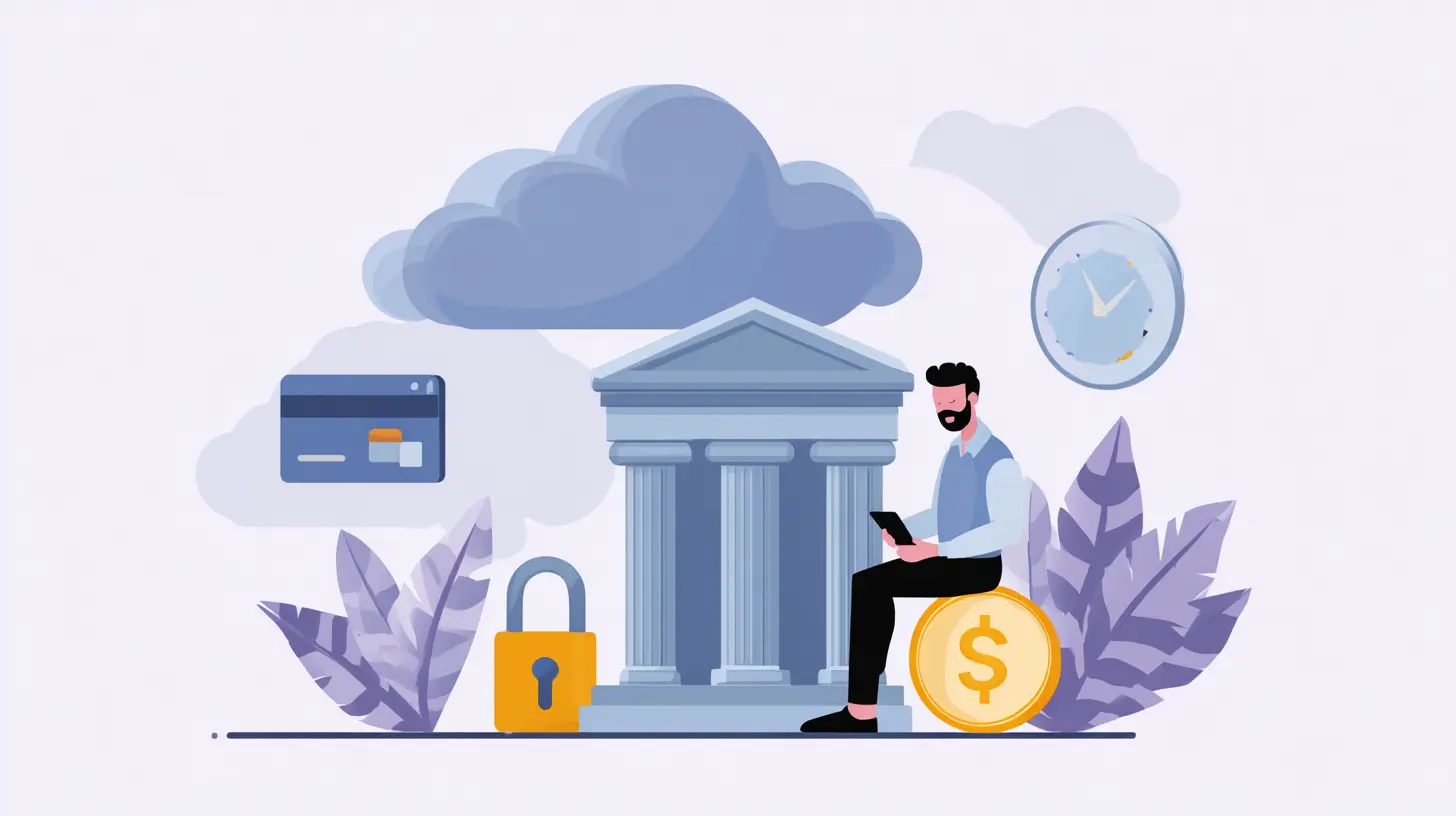
The Shift from Vaults to Virtual Machines
Think about a traditional bank vault. It is heavy, physical, and guarded by layers of concrete and armed personnel. The security model is simple: keep people out. Now imagine that vault is replaced by a library where every book contains a piece of your money, and anyone can walk in and read a book, but only some people can write in them. That is the cloud.The core difference is that cloud security is not about walls. It is about identity, permissions, and data flows. You are not protecting a physical perimeter. You are protecting a logical one that exists in multiple places at once. Your data might be replicated across three different regions for disaster recovery. That means your security model has to be replicated too, and it has to be consistent.
This is where many banks stumble. They take their old on-premises security playbook and try to apply it to the cloud. It does not work. You cannot put a firewall in front of a cloud service that is actually a collection of APIs and microservices. You cannot do a simple network scan when your infrastructure is defined in code and changes every few minutes.
The first thing you need to understand is that cloud security in banking is a shared responsibility model. The cloud provider, whether that is AWS, Azure, or Google Cloud, is responsible for the security of the cloud. That means the physical data centers, the hardware, the network infrastructure, and the hypervisor layer. You are responsible for security in the cloud. That means your applications, your data, your access policies, your encryption keys, and your configurations.
This sounds simple, but it is the root of most cloud security failures. Banks often assume that because they are using a major cloud provider, their data is automatically safe. That is like assuming your house is safe because you live in a good neighborhood. The locks on your doors are still your responsibility.

The Shared Responsibility Model and Why It Confuses Everyone
Let me give you a concrete example. Suppose you are a bank and you store customer data in an S3 bucket on AWS. AWS is responsible for making sure that the physical disk that stores your data does not fail and that the network is not intercepted. But AWS is not responsible for making sure that your S3 bucket is private. If you accidentally configure the bucket as public, that is on you. And yes, this has happened to banks. In fact, it has happened to many companies, and some of them were in the financial sector.The confusion comes from the word "shared." It sounds like a partnership. But in practice, it is more like a handoff. The provider hands you a secure platform, and from that point forward, you are the one who has to make sure you use it correctly. The provider gives you tools for encryption, identity management, and monitoring. But they do not use those tools for you.
This is why cloud security in banking requires a different mindset. You have to think like a builder, not a guard. You are constructing a system where every component has its own security properties, and you have to wire those components together in a way that does not create gaps.
Consider encryption. In a traditional data center, you might encrypt data at rest using a hardware security module (HSM) that sits in your server room. In the cloud, you can still use an HSM, but it is often a cloud-based service. You have to manage the keys yourself, and you have to decide who can access those keys. If a developer accidentally gets write access to the key management system, they could decrypt all customer data. That is a subtle failure that does not exist in the physical world because you would have to walk into the server room to touch the HSM.

Identity Is the New Perimeter
The old security model was about network segmentation. You had a demilitarized zone (DMZ), internal networks, and strict firewall rules. The cloud does not work that way. There is no internal network in the traditional sense. Everything is exposed via APIs, and the only thing standing between an attacker and your data is the identity and access management (IAM) system.This is a massive shift. In the old world, if you were inside the network, you were trusted. In the cloud, nothing is trusted by default. You have to verify every request, every time. This is called zero trust architecture, and it is not just a buzzword. It is the only way to secure a distributed system where the network is not a boundary.
For digital banking, this means that every API call from a mobile app, every transaction request, and every admin action has to be authenticated and authorized. And it is not just about the user. It is about the service. If one microservice needs to talk to another microservice, that communication has to be secured. This is where things get complicated, because you are not just managing human identities. You are managing machine identities.
Machine identities are often overlooked. A bank might have thousands of service accounts, API keys, and certificates. If one of those is compromised, an attacker can move laterally through the system. This is how many breaches happen. The attacker does not break in through the front door. They find a forgotten API key in a code repository and use it to access internal systems.
The best practice here is to use short-lived credentials. Instead of issuing a static API key that lasts for years, you issue temporary credentials that expire after a few minutes. This is what cloud providers recommend, but many banks still use static keys because they are easier to manage. The trade-off is convenience versus security. And in banking, security has to win, even if it means more operational overhead.

Data Protection: Not Just Encryption
Encryption is table stakes. If you are a bank and your data is not encrypted at rest and in transit, you should not be in business. But encryption is not enough. You also need to manage the keys, control access to the data, and monitor how the data is being used.One of the biggest misconceptions is that encryption solves everything. It does not. If an attacker gains access to your application and can query the database, the data is returned in plaintext to the application. The encryption does not help because the application is a legitimate user. This is why you need more than encryption. You need data loss prevention (DLP) tools that can detect when sensitive data is being exfiltrated.
For example, suppose a bank employee with legitimate access to customer data decides to copy that data to a personal USB drive. Encryption will not stop that because the employee is authorized to read the data. DLP tools can detect the unusual transfer and block it. But DLP tools are not perfect. They generate false positives and can slow down legitimate workflows. Banks have to find a balance between monitoring and usability.
Another critical aspect is data residency. Banks are subject to regulations that require customer data to be stored in specific geographic locations. The cloud makes this tricky because data is often replicated across regions for redundancy. You have to configure your cloud environment to respect data residency requirements. This is not just a compliance issue. It is a legal one. If you store European customer data on a server in the United States without proper safeguards, you are violating GDPR.
The Human Factor: Where Security Goes to Die
Let me tell you a story. A mid-sized bank decided to move its core banking system to the cloud. The IT team spent months planning the migration. They set up virtual private clouds, configured IAM roles, and implemented encryption. They were proud of their work. Then, on the first day of the migration, a senior developer needed to debug an issue. He did not have the right permissions, so he asked the cloud administrator to grant him temporary full access. The administrator did it and forgot to revoke it.A week later, a phishing email tricked the developer into entering his credentials on a fake login page. The attacker now had full access to the bank's cloud environment. They did not steal money immediately. They sat quietly, mapped the system, and found a way to transfer funds to a dummy account. The bank only noticed when a customer complained about a missing balance.
The lesson here is not that cloud security is weak. The lesson is that human error is the weakest link. No amount of technical controls can protect you from someone who accidentally grants too much access or falls for a phishing scam.
This is why security training is not optional. It is a continuous process. But training alone is not enough. You need technical controls that enforce least privilege. That means no one, not even a senior developer, should have full access by default. Access should be granted on a need-to-use basis and should expire automatically.
Multi-factor authentication (MFA) is another non-negotiable. But MFA is not foolproof. Attackers have developed ways to bypass it, such as using "pass the cookie" attacks or phishing for session tokens. You need to combine MFA with behavioral analytics that can detect when a user is behaving suspiciously.
Real-World Threats: Not Just Hackers in Hoodies
When people think of cyber threats, they imagine a lone hacker in a dark room. The reality is more organized and more dangerous. Banks face threats from nation-state actors, organized crime syndicates, and even insiders. Each of these has different motivations and different methods.Nation-state actors are often looking for intelligence or geopolitical leverage. They are patient and sophisticated. They will spend months or years inside a system, quietly exfiltrating data. Organized crime is more direct. They want money, and they will use ransomware, fraud, or direct theft. Insiders are the most unpredictable. They might be disgruntled employees, or they might be coerced by external actors.
In the cloud, these threats are amplified because the attack surface is larger. You have more APIs, more services, and more integration points. Each one is a potential entry vector. This is why monitoring and logging are critical. You cannot defend against what you cannot see.
But logging is not just about collecting data. It is about analyzing it. Many banks collect terabytes of logs but do not have the tools or the staff to make sense of them. This is where security information and event management (SIEM) systems come in. They aggregate logs from different sources and use rules and machine learning to detect anomalies.
The challenge is that SIEM systems are expensive and complex. They require dedicated teams to manage them. Smaller banks might not have the resources to run a full SIEM operation. In that case, they can use managed security service providers (MSSPs) that offer cloud-based SIEM services. The trade-off is that you are trusting a third party with your security data, which introduces its own risks.
Compliance: The Elephant in the Room
Banks are heavily regulated. In the United States, you have GLBA, SOX, and state-level regulations like the New York DFS cybersecurity requirements. In Europe, you have GDPR and PSD2. In Asia, you have a patchwork of regulations that vary by country. The cloud adds a layer of complexity because regulators are still catching up.One of the biggest challenges is demonstrating compliance in a dynamic environment. In a traditional data center, you could show a regulator a physical server and explain the security controls. In the cloud, the infrastructure is abstracted. You have to provide evidence that your configurations meet regulatory requirements. This is where infrastructure as code (IaC) helps. When your cloud environment is defined in code, you can audit that code and show that it meets specific security standards.
But IaC is not a silver bullet. If your code has a vulnerability, then your infrastructure has a vulnerability. You need to scan your IaC templates for misconfigurations before you deploy them. This is a relatively new practice, and many banks are still learning how to do it well.
Another compliance issue is third-party risk. Banks often use cloud services from multiple providers, and each provider has its own security posture. You cannot just assume that a major cloud provider is compliant with all regulations. You need to review their compliance certifications and understand their responsibilities under the shared responsibility model.
Practical Advice for Banks and Customers
If you are a bank or a fintech company, here is what you should focus on.First, invest in identity and access management. This is the foundation of cloud security. Make sure you have fine-grained IAM policies, enforce least privilege, and use short-lived credentials. Automate the process of granting and revoking access.
Second, implement robust logging and monitoring. You need to know what is happening in your cloud environment at all times. Use a SIEM or a cloud-native monitoring tool. Set up alerts for suspicious activity, and make sure someone actually responds to those alerts.
Third, encrypt everything, but also manage your keys properly. Use a hardware security module or a cloud key management service. Separate the duties of key management from the duties of data access.
Fourth, test your incident response plan. Do not wait for a breach to figure out what to do. Run tabletop exercises and simulate attacks. Make sure you know how to contain a breach, preserve evidence, and communicate with regulators and customers.
If you are a customer, there is not much you can do about the technical details. But you can protect yourself by using strong, unique passwords and enabling MFA on your banking apps. Be wary of phishing emails that ask for your credentials. And if you notice any suspicious activity on your account, report it immediately.
The Future: Cloud-Native Security
The next frontier is cloud-native security. This means building security into the application from the start, rather than bolting it on after the fact. It involves using tools like service meshes, zero trust proxies, and continuous security scanning in the CI/CD pipeline.For banks, this is both an opportunity and a challenge. The opportunity is that cloud-native security can be more effective and more efficient than traditional security. The challenge is that it requires a cultural shift. Developers and security teams have to work together, and security has to be part of the development process, not an afterthought.
One trend to watch is confidential computing. This is a technology that encrypts data while it is being processed, not just when it is stored or in transit. This is a game-changer for banks because it means that even if an attacker compromises the application, they cannot read the data because the data is encrypted in memory. Confidential computing is still in its early stages, but it has enormous potential.
Another trend is the use of AI and machine learning for security. AI can analyze vast amounts of data and identify patterns that humans would miss. It can detect fraud in real time, flag unusual behavior, and even predict attacks before they happen. But AI is not a replacement for human judgment. It is a tool that can augment human capabilities.
Common Mistakes and Misconceptions
Let me address a few common mistakes that banks make when moving to the cloud.The first mistake is treating the cloud as a single entity. The cloud is not one thing. It is a collection of services, each with its own security model. You cannot secure a cloud environment with a single firewall or a single policy. You have to secure each service individually.
The second mistake is neglecting to secure the development pipeline. Many banks focus on securing the production environment but forget that the code that runs in production comes from a pipeline. If an attacker can compromise your CI/CD system, they can inject malicious code into your applications. This is a growing threat, and it is often overlooked.
The third mistake is assuming that compliance equals security. Just because you pass a regulatory audit does not mean you are secure. Compliance is a minimum baseline, not a guarantee of safety. You need to go beyond what regulators require and implement best practices.
The fourth mistake is failing to plan for a breach. Every bank will eventually experience a security incident. The question is not if, but when. If you do not have a plan for how to respond, you will panic, make bad decisions, and exacerbate the damage.
Wrapping It Up
Cloud security in digital banking is complex, but it is not impossible. It requires a shift in mindset, a willingness to embrace new technologies, and a commitment to continuous improvement. The days of building a wall around your data are over. The future is about building a system that is resilient, adaptable, and secure by design.If you are a bank, do not be afraid of the cloud. Embrace it, but do so with your eyes open. Understand the shared responsibility model, invest in identity and access management, and do not treat security as an afterthought. If you are a customer, be aware that your bank is working hard to protect your money, but you also have a role to play in keeping your account safe.
The cloud is not a destination. It is a way of operating. And for banks, that way of operating must include security at every level. Because at the end of the day, trust is the most valuable currency a bank has. And trust is built on security.
all images in this post were generated using AI tools
Category:
Banking SecurityAuthor:

Yasmin McGee
Discussion
rate this article
2 comments
Eden Snow
Cloud security in digital banking is crucial. It's comforting to know that as we embrace technology, experts are working hard to keep our financial information safe. Staying informed can make all the difference...
September 7, 2026 at 7:04 PM
Yasmin McGee
Thanks for your insight! It's true that staying informed is key to navigating cloud security in banking. We're committed to keeping our readers updated on these important developments.
Mara McVaney
This article raises important points about the intersection of cloud security and digital banking. With so much at stake, it's crucial for both banks and customers to understand these challenges. I'm curious how emerging technologies will further shape security measures in this evolving landscape.
September 6, 2026 at 2:27 AM
Yasmin McGee
Thanks for your thoughts! Emerging technologies will definitely play a key role in enhancing security measures as we move forward. It's an exciting time for digital banking and cloud security.