Why Biometric Security Will Define Digital Wallets in 2027
16 April 2026
Remember the last time you fumbled for a password, squinted at a 2FA code on a different device, or felt that tiny pang of anxiety after a data breach announcement? We’ve all been there. Our digital financial lives, especially our digital wallets, are protected by gates made of increasingly complex strings of characters. But what if the key wasn’t something you had to remember or carry, but something you simply are? This isn’t science fiction; it’s the imminent reality of financial technology. By 2027, the humble password will be rendered a relic, and biometric security will cease to be a fancy feature—it will become the very bedrock upon which digital wallets are built and trusted.
Let’s unpack why this shift is not just inevitable but essential, and how it will reshape our relationship with money in the digital sphere.
The Fragile House of Cards: Today’s Digital Wallet Security
To appreciate the future, we need to diagnose the present. Today’s digital wallets—whether they’re from Apple, Google, Samsung, or your bank—rely on a multi-layered but fundamentally fragile security model. It’s a bit like protecting a vault with a padlock, a guard who sometimes texts you a code, and a secret handshake you keep written on a sticky note.The primary weaknesses are glaring:
* The Password Problem: We are terrible at creating and remembering strong, unique passwords. Reuse is rampant. Databases get breached. It’s a losing battle.
* SIM Swap & Phishing Attacks: Clever social engineering can bypass even the best 2FA by tricking carriers or users themselves. That one-time code sent via SMS? It’s shockingly vulnerable.
* Device-Centric Vulnerability: If your phone is stolen and unlocked, a thief often has a straight shot to your wallet app. The "something you have" (your phone) isn’t enough if it’s not inextricably linked to "something you are."
This system creates friction for you and opportunity for bad actors. Every time you authenticate, you’re performing a small, conscious security ritual. But what if security was unconscious, seamless, and far more robust? Enter biometrics.
Beyond the Fingerprint: The Biometric Arsenal Evolves
When you hear "biometrics," you likely think of your phone’s fingerprint sensor or facial recognition. That’s just the opening act. By 2027, the biometric toolkit will have evolved from a single key into a sophisticated, multi-factor authentication symphony. Behavioral Biometrics: This is the silent guardian. It’s not about what you are, but how* you behave. How do you hold your phone? What’s your unique typing rhythm, your swipe pressure, or even your walking gait (measured by your phone’s sensors)? A wallet app using behavioral analytics would notice if someone with a different grip and erratic typing style tried to initiate a large transfer. It could silently lock down before any explicit fraud occurs.
* Vein Pattern & Heartbeat Recognition: Technologies that map the unique pattern of veins in your palm or finger, or even your cardiac rhythm, are emerging. These are incredibly difficult to spoof because they are internal, not surface-level.
Multi-Modal Fusion: The future isn’t choosing between a fingerprint or a face scan. It’s about and, not or. A high-value transaction might require a quick glance and* a voice command. This layered approach makes spoofing astronomically difficult. Think of it as needing two unique biological keys turned simultaneously to open the vault.
The 2027 Digital Wallet Experience: Seamless, Smart, and Secure
So, what will using a digital wallet in 2027 actually feel like? Let’s paint a picture.You walk into a store, pick up an item, and walk out. No phone tap, no watch twist. The store’s sensors, paired with your biometric-enabled wallet and secure digital ID, authenticate you via gait analysis and a micro-expression scan from a camera (with your explicit prior consent, of course). Payment is automatic and post-transaction authenticated by your heartbeat pattern via your wearable device. Frictionless.
For a peer-to-peer transfer of a significant amount, you open your wallet app. It instantly recognizes you via passive facial recognition. You input the amount and recipient. Instead of hitting "send" and entering a password, the app prompts: "Please confirm with your voice." You simply say, "Authorize transfer." The system analyzes your unique vocal patterns—the pitch, the cadence, the subtle harmonics no recording can perfectly replicate—and the transaction completes. It feels effortless, yet it’s secured by a fortress of your own biology.
This shift does something profound: it decouples security from conscious effort. Security becomes a background process, like your immune system. You don’t actively fight off every germ; your body does it automatically. Biometric-secured wallets will operate on the same principle.
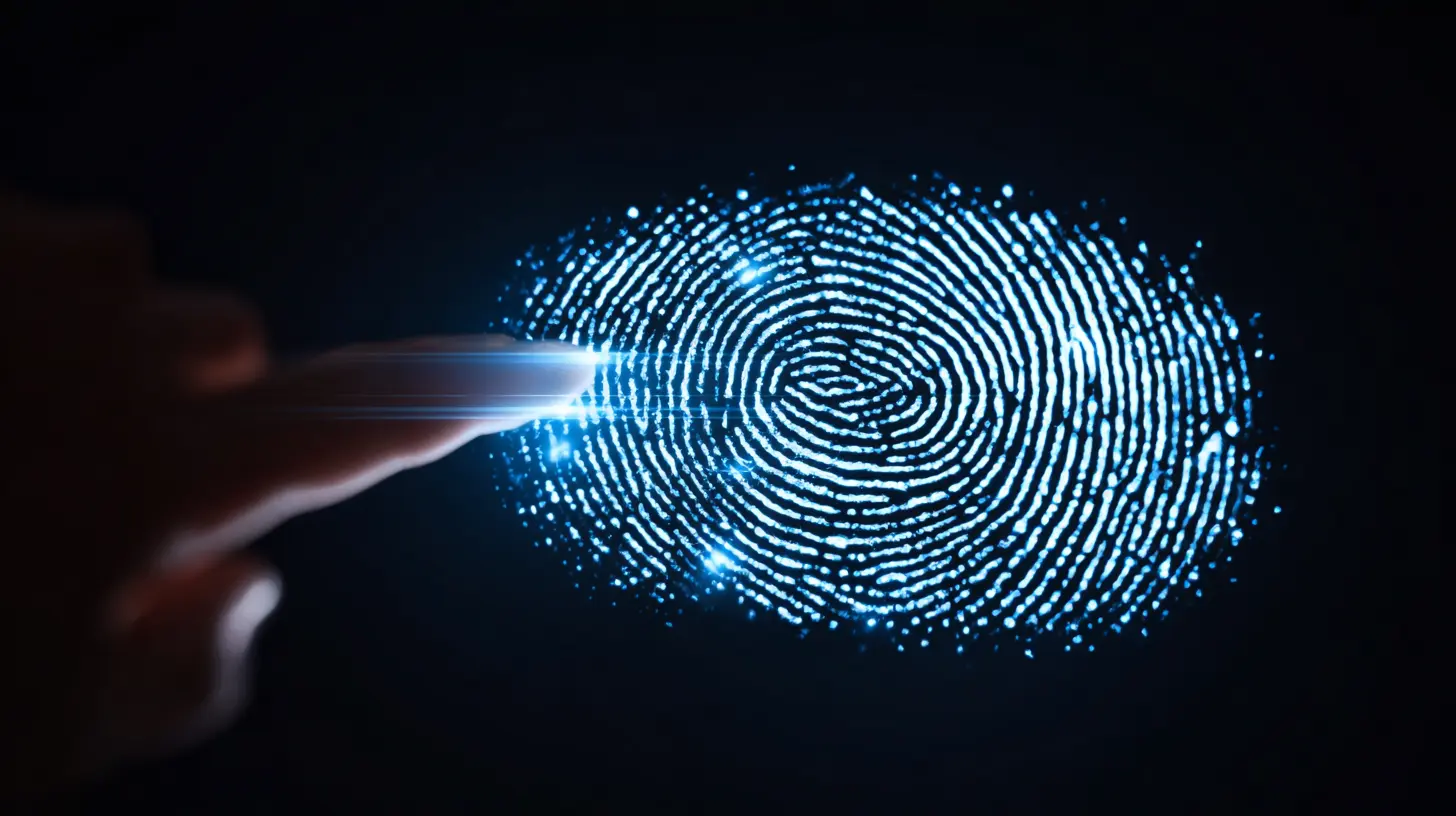
The Trust Imperative: Building the Bridge to Mass Adoption
All the technology in the world is useless without trust. And let’s be honest, the idea of handing our fingerprints, face maps, and behavioral data to corporations is, rightly, met with skepticism. The scandals and data breaches of the past decade have left us wary. For biometric wallets to truly define 2027, they must solve the trust equation. How?1. On-Device Processing is Non-Negotiable: The golden rule of 2027’s biometrics will be: Your biometric template never leaves your personal device. Unlike a password stored on a server somewhere, your face or fingerprint data will be encrypted and stored in a secure enclave on your phone or wearable. The authentication happens locally. The server only ever receives a simple "yes/no" cryptographic signal. This means even if the wallet company is hacked, your biometric blueprint isn’t in the data dump.
2. Decentralized Identity (Self-Sovereign Identity): This is the game-changer. Imagine you own a verified, biometric-secured digital ID stored on your device. To prove you’re over 21 or have a valid license, you don’t send a copy of your passport to every app. You present a cryptographically signed, biometric-secured verification that says, "Yes, this person is over 21," without revealing your birthdate or any other unnecessary data. Your wallet becomes the custodian of this minimal, privacy-focused identity. You control what you share.
3. Transparent Regulation and User Control: By 2027, clear global standards (like evolving versions of GDPR with biometric-specific clauses) will mandate explicit, informed consent. You will have granular control: "Use my face for payments under $100, but for anything over $500, require my voice and my fingerprint." This user-centric control panel will be standard.
The Ripple Effect: What This Means for Finance and Beyond
The biometric-definition of wallets won’t happen in a vacuum. It will send shockwaves through the entire financial ecosystem.* The Death of Card Numbers: If your face is your authenticator, why do you need a 16-digit number, expiry date, and CVV floating around the web? Tokenization—replacing card details with random tokens—is already here, but biometrics will make the underlying card number itself obsolete. Your payment token will be unlocked by you, and you alone.
* Hyper-Personalized, Secure Finance: Your wallet, knowing it’s unequivocally you, can offer tailored services. Imagine negotiating a loan in-app and getting an instant, personalized rate because the system can verify your identity and creditworthiness with absolute certainty in seconds.
* Financial Inclusion: For the billions without formal ID but with a mobile phone, a biometric-secured wallet linked to a decentralized identity could be their first entry into the formal financial system. Your face can become your financial passport.
* The Convergence of Identity and Payment: Your digital wallet won’t just be for money. It will be for your driver’s license, your health records, your concert tickets—all secured by the same biometric layer. The wallet becomes your digital self, with payments as just one of its functions.
Navigating the Chasm: Challenges on the Road to 2027
The path isn’t without potholes. We must thoughtfully address:* The Spoofing Arms Race: As biometrics advance, so will spoofing attempts (high-resolution masks, deepfake videos). The answer is liveness detection and multi-modal fusion. Systems will need to prove you’re a living, present human.
The Bias in the Machine: Early facial recognition systems infamously struggled with accuracy across different ethnicities and genders. By 2027, the datasets and algorithms used must* be audited for bias to ensure equitable access and security for all.
* The "What If I’m Injured?" Question: Robust fallback mechanisms are crucial. A trusted family member or lawyer with multi-party approval, or a time-delayed hardware key stored in a safe, could provide recovery options without compromising the primary biometric system.
Conclusion: Not Just a Feature, But the Foundation
By 2027, asking "does this digital wallet have biometric security?" will sound as absurd as asking "does this car have wheels?" It won’t be a feature you tick on a checklist; it will be the fundamental assumption, the invisible, seamless foundation upon which the entire experience is built.Biometric security will define digital wallets because it uniquely solves the core dilemma of the digital age: how to be both effortlessly convenient and fortress-secure. It moves us from protecting our assets with what we know (and can forget) or what we have (and can lose), to protecting them with who we are. It represents a profound shift from transactional security to persistent identity assurance.
The digital wallet of 2027 will be less like a leather billfold in your pocket and more like a hyper-intelligent, invisible financial guardian that knows you better than anyone else possibly could—because it is keyed to the very essence of your physical being. And in that paradox—extreme personalization enabling ultimate security—lies the future of our financial freedom.
all images in this post were generated using AI tools
Category:
Digital WalletsAuthor:

Yasmin McGee
Discussion
rate this article
2 comments
Faenor Alvarez
This article raises important points about the future of digital wallets. Biometric security could really enhance user trust and convenience. It will be interesting to see how businesses adapt to this technology and what innovations emerge in the next few years. Great insights!
July 17, 2026 at 3:18 AM
Yasmin McGee
Thanks for your thoughts! I agree, biometric security has huge potential to change the game for digital wallets. Exciting times ahead!
Noora Beck
Imagine unlocking your digital wallet with a wink and a jazz hands gesture! In 2027, biometric security might not just protect our cash; it could turn transactions into a Broadway show. Watch out, wallets—the future is flashy!
April 19, 2026 at 4:57 AM
Yasmin McGee
Absolutely! The future of biometric security promises to add excitement and flair to transactions, making everyday activities feel more like a performance.