From Apps to Implants: The Extreme Future of Digital Wallets
10 October 2026
The digital wallet has become so ordinary that we rarely stop to think about what it actually is. For most people, it is a rectangle of glass in a pocket that holds a few cards, a transit pass, and maybe a boarding pass. That framing undersells the scale of the shift underway. The wallet is not a product category so much as a layer of infrastructure that sits between you and your money, your identity, and increasingly your body. Understanding where that layer is going requires looking past the current app interfaces and examining the forces that push payments closer to the human body.
This article examines the trajectory from phone-based wallets to implantable and embedded payment systems. It is not a prediction of inevitability. It is an analysis of the incentives, the technology, the risks, and the practical decisions that will shape whether the extreme version of the digital wallet ever becomes mainstream.
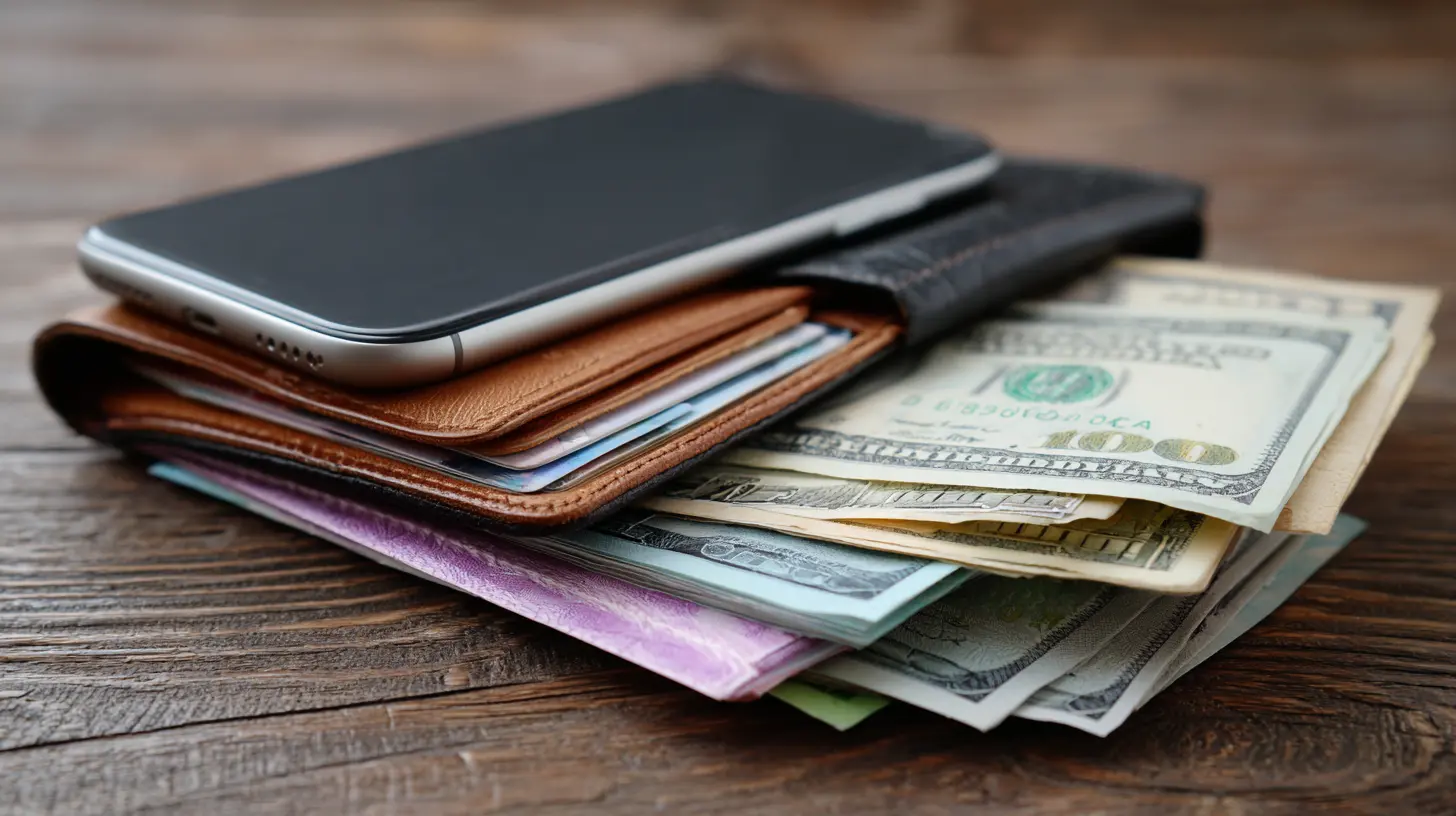
Why the Wallet Keeps Moving Closer to the Body
Every major shift in payment technology has followed a simple pattern: reduce friction, then reduce the distance between the payer and the point of transaction. Cash required physical proximity and counting. Cards removed counting but kept a physical token. Contactless cards removed the swipe. Phone wallets removed the need to carry a card at all. Each step traded a small amount of control and visibility for speed and convenience.The logic of that progression points toward payments that require no device at all, or at least no device you have to hold. The question is not whether the technology can do this. Near field communication, secure elements, and biometric verification already exist in miniature. The question is whether the economics, the regulation, and the social acceptance align.
Three forces drive the movement:
- Merchant economics. Every second saved at checkout has measurable value, especially in high-volume retail. Payment methods that reduce transaction time get adopted quickly when the cost is low.
- Platform lock-in. Apple, Google, and Samsung treat the wallet as a strategic gateway to loyalty, data, and financial services revenue. Keeping the user inside their ecosystem is worth more than the transaction fee itself.
- Identity convergence. A wallet is no longer just money. It is a driver's license, a health record, an access badge, and a proof of age. Once identity and payment merge, the incentive to make the wallet always available and always on the body grows.
The Current State: What Phone Wallets Actually Do Well
Before projecting forward, it is worth being precise about what today's wallets get right, because those strengths define the baseline any implant must beat.Phone wallets succeed because they combine three properties:
1. Secure hardware isolation. Payment credentials are stored in a dedicated chip that the operating system cannot freely read. This limits the damage from malware.
2. Biometric gating. Face or fingerprint verification ties the transaction to a living person, which reduces the value of a stolen device.
3. Tokenization. The actual card number is replaced by a device-specific token. If the token leaks, it can be revoked without reissuing the card.
These are genuine engineering achievements, not marketing language. Any implantable or embedded system must replicate all three or accept a lower security standard. That is a high bar, and it explains why the transition will be slower than headlines suggest.

The Implant Frontier: What Exists Today
Implantable payment technology is not science fiction. It has existed in limited form for years. The most common approach uses a small passive chip, roughly the size of a grain of rice, encased in biocompatible glass and injected under the skin of the hand, usually between the thumb and forefinger. The chip contains a secure element and an antenna. When placed near a compatible reader, it draws power from the reader's field and transmits a token.The practical limitations are significant and often glossed over:
- Range and orientation. These chips work only at very short range and require correct alignment. A reader that works fine with a phone may fail with a hand.
- No battery, no biometrics. Passive implants cannot perform fingerprint or face verification on their own. Authentication must happen elsewhere, which weakens the "something you are" factor.
- Removal and replacement. Exchanging a chip means a medical procedure, however minor. That is a very different cost profile from upgrading a phone.
- Reader compatibility. Most payment terminals are certified for cards and phones, not for arbitrary implantable tokens. Certification is slow and expensive.
Advocates point out that the chip never gets lost, never runs out of battery, and cannot be left at home. Critics point out that a payment credential embedded in your body is difficult to revoke quickly if compromised, and that the physical and psychological barriers to adoption are far higher than for a phone.
Embedded Wallets: The Middle Path
Between the phone and the implant sits a less dramatic but more commercially viable category: embedded and ambient payment. This includes rings, watches, clothing, and subdermal or wearable patches that carry a secure element. Smart rings already perform contactless payments in several markets. They are not implants, but they move the wallet off the phone and onto the body.Why this middle path matters: it captures most of the convenience benefit with far fewer of the medical, ethical, and regulatory problems. A ring can be removed, replaced, and reissued. It can be charged. It can be resold or discarded. It does not require a procedure.
The trade-off is that a ring is still a thing you can lose. It is still a device with a battery and a firmware update cycle. It does not eliminate the device; it just relocates it. For many users, that is enough. For the implant advocates, it is a half measure.
Security: The Core Tension
The central question for any body-embedded wallet is security. Not because the technology is inherently unsafe, but because the threat model changes in ways that are easy to underestimate.What improves
- No transmission interception at a distance. A passive implant has an extremely short read range, which limits remote skimming.- No loss or theft in the traditional sense. You cannot leave your hand at a restaurant.
- Harder to clone casually. Extracting a secure element from a body is not a realistic attack for most criminals.
What worsens
- Coercion. A phone can be handed over. An implant cannot. That sounds like an advantage until you consider that a determined attacker may resort to physical force. The security literature on this is uncomfortable but real.- Revocation latency. If a token is compromised, deactivating it may require a visit to a clinic or a specialized tool, not a phone call to your bank.
- Update difficulty. Firmware and key rotation are routine on a phone. On an implant, they may be impossible or require replacement.
- Single point of failure. If the implant is your only credential and it fails, you may have no fallback at the moment you need to pay.
A rational design would treat the implant as one factor among several, not a replacement for the phone. The mistake to avoid is assuming that because a technology is more advanced, it is automatically more secure. It is not. Security is a property of the whole system, including how you recover when things go wrong.
Regulation, Liability, and the Question of Consent
Financial regulation moves slowly, and for good reason. Payment systems are critical infrastructure. Implantable wallets raise issues that current frameworks handle poorly.Consider liability. If a transaction fails because the implant's token was not recognized, who is responsible? The bank, the terminal manufacturer, the chip vendor, or the user? In card and phone payments, this is largely settled through scheme rules and chargeback processes. For implants, the chain of responsibility is less defined.
Consider consent. An implant is a medical procedure, however minor. That brings in questions of informed consent, data protection, and the right to withdraw. If your employer offers a discounted implant for building access and payment, is that genuinely voluntary? The line between convenience and coercion is thin.
Consider data. A payment token is not just money. It is a signal about where you are, what you buy, and when. Linking that to a permanent physical identifier creates a data profile that is difficult to escape. Privacy advocates have legitimate concerns here, and they are not merely theoretical.
Practical Guidance: How to Think About Adoption
If you are evaluating whether to adopt any form of body-embedded or wearable wallet, work through these questions in order.1. What problem does it actually solve? If the answer is "I want to pay faster," a phone or ring likely suffices. If the answer is "I need hands-free access in a specific environment," the case is stronger.
2. What is the fallback? Never rely on a single payment method. Keep a card and a phone wallet active.
3. Who controls revocation? Know exactly how to disable the credential and how long it takes.
4. What data is collected? Read the terms. If the issuer can link your transactions to a persistent identifier, assume they will.
5. What is the replacement cycle? For implants, understand the procedure and cost. For wearables, understand battery and firmware support.
6. What happens if the vendor exits? A closed ecosystem that depends on one company is a risk. Prefer standards-based systems where possible.
The most common mistake is treating a new payment form as a status symbol rather than infrastructure. Infrastructure decisions should be boring and reversible. If a wallet choice cannot be reversed without surgery, it deserves more scrutiny, not less.
Misconceptions Worth Correcting
"Implants are more secure because they are inside you." Physical embedding does not equal cryptographic security. The security comes from the secure element and the tokenization scheme, not the location."Phone wallets are just apps." They are hardware-backed credential stores with dedicated chips and certified software. The app is the least important part.
"Cash is the only private option." Cash has real privacy advantages, but it also has practical limits. The honest position is that privacy is a spectrum, and every digital method trades some of it for convenience.
"This is all happening in five years." Adoption curves for body-embedded payments have been predicted to accelerate for over a decade. They have not, largely because the incentives for consumers remain weak relative to the friction.
What a Realistic Future Looks Like
The most likely path is not a sudden leap from app to implant. It is a gradual layering:- Near term: Phone wallets dominate. Wearables such as rings and watches take a meaningful share in specific segments.
- Medium term: Embedded credentials appear in more form factors, including clothing and accessories, with standards emerging around token portability.
- Long term: Implantable credentials remain a niche, used by enthusiasts, certain professional environments, and people with specific accessibility needs. They do not replace the phone for most users.
The extreme future is real, but it is optional. The wallet will keep moving closer to the body because the economics favor it. Whether it goes inside the body depends on whether the security, regulation, and social acceptance can catch up. For now, the smart move is to understand the trade-offs, keep a fallback, and treat any irreversible decision with the caution it deserves.
all images in this post were generated using AI tools
Category:
Digital WalletsAuthor:

Yasmin McGee